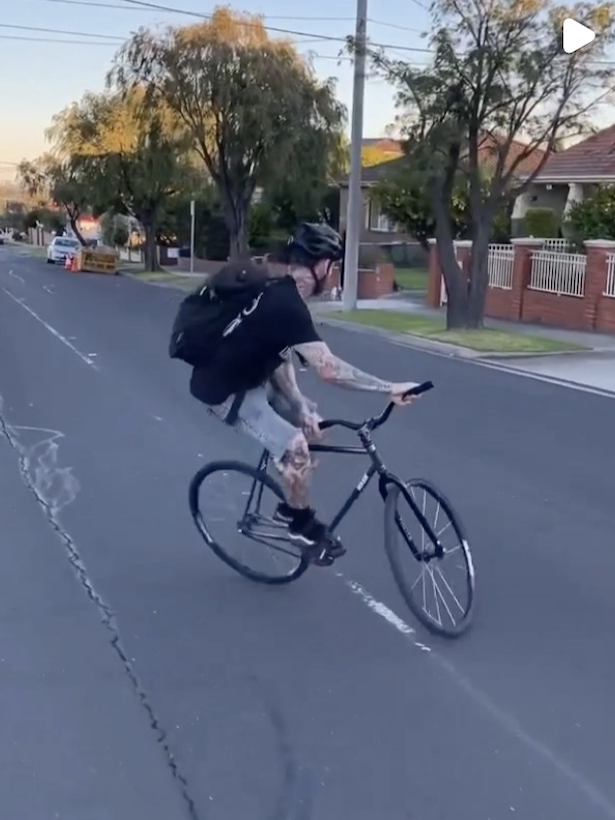
You’ve seen the videos—riders effortlessly floating down the street on one wheel, making it look easy. So you try it on your fixie and… nothing. Or worse, you get the front wheel up for half a second before it slams back down like the bike is magnetically attached to the ground 😤.
Here’s what nobody tells you: your bike is fighting you the entire time. That locked drivetrain that makes fixed gears so pure? It’s the exact reason wheelies are exponentially harder. You can’t coast at the balance point. You can’t pause. You can’t use any of the techniques that work on literally every other bike 👍.
But wheelies on a fixie are possible—you just need to stop fighting the physics and start working with it. Master the track stand first, learn the specific technique that actually works, and set realistic expectations. If you can hold it for 5 seconds, you’re doing better than most riders will ever achieve.
TL;DR:
- Wheelies are possible on fixed gears, but require constant backward pedal pressure since you can’t coast at the balance point—fundamentally different from freewheel technique
- Gear ratios between 2.7-3.0 (like 47/17 or 48/17) provide the sweet spot for control without being too spinny or too heavy
- Most riders never nail sustained rolling wheelies, but 3-5 second wheelies are totally achievable with proper technique
- Track stand mastery is your prerequisite—it builds the backward pressure familiarity you need for wheelie control
A video titled “Pure Fix TV: How to Wheelie” from the Pure Cycles YouTube channel.
The Short Answer: Yes, But It’s Not What You Think
Can you wheelie on a fixed gear? Absolutely. Should you expect it to work like your old BMX? Hell no.
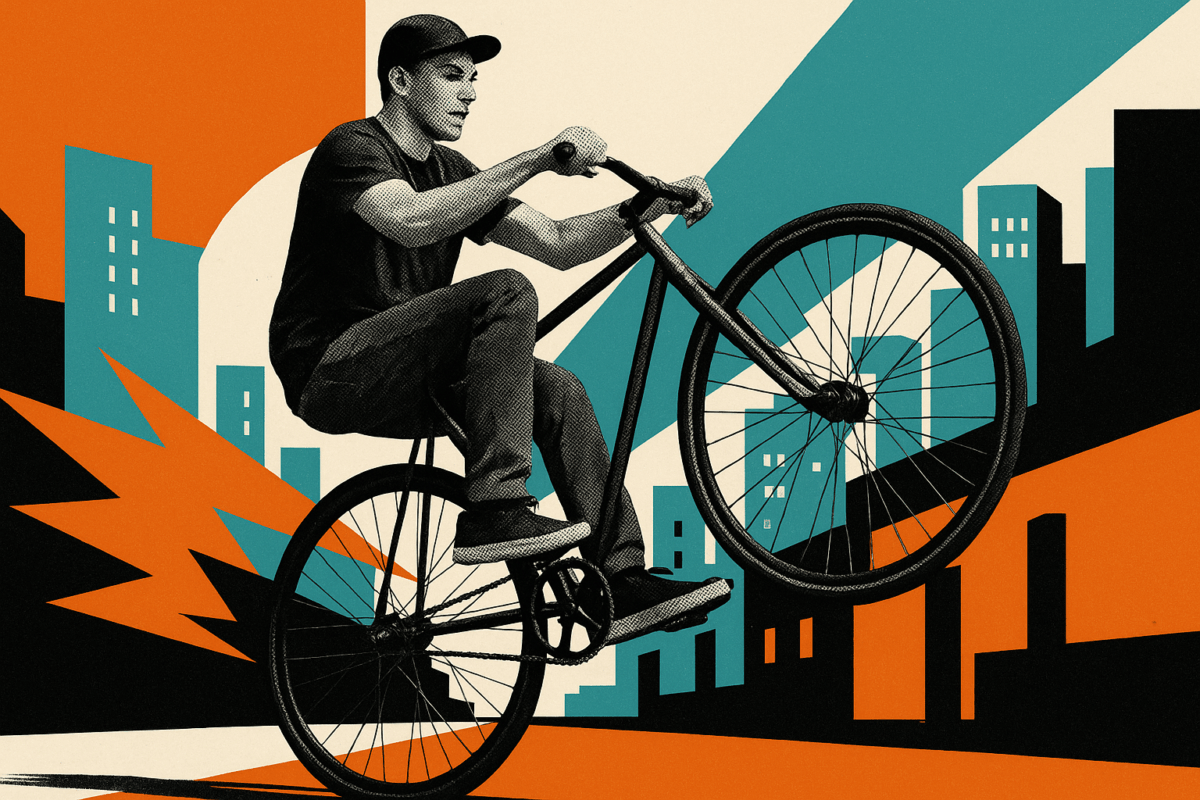
Wheelies on a fixie are legitimately harder than on freewheel bikes. The locked rear wheel fundamentally changes the physics. You can’t just pop the front wheel up, find the sweet spot, and coast. That entire strategy doesn’t exist on fixed gears.
Short wheelies (1-5 seconds) are totally doable. Rolling wheelies that last for blocks? That’s unicyclist-level difficulty, and most fixed gear riders never get there.
Why Fixed Gear Wheelies Are Actually Harder
On a freewheel bike, wheelies follow a simple formula: explosive pull + finding the balance point + coasting. Once you’re at that balance point, you can literally stop pedaling and hover there, using tiny rear brake taps to prevent looping out.
On a fixed gear, that middle step doesn’t exist. The moment you stop applying backward pressure, your rear wheel tries to rotate forward, which drops your front wheel. There’s no “pause button.”

Your pedals are mechanically linked to your rear wheel—always. Fixed gear wheelies function more like riding a unicycle than a traditional bike wheelie—you’re actively resisting forward momentum the entire time you’re up there.

Did you know?
Your rear wheel is always connected to your pedals—if the wheel moves backward even slightly, your pedals do too. This is why holding a wheelie while stationary feels impossible.
The Technique: What You Need to Do Differently
The Explosive Initial Pull
You’ll need more pop on a fixed gear than a freewheel. Your pedal position at initiation is critical. Start with your dominant foot around 1-2 o’clock position—this gives you maximum leverage for the explosive downstroke.
The pull: sharp tug on the bars + explosive pedal stroke + immediate weight shift backward. All three happen within about half a second. Miss the timing on any one element, and you’re staying grounded.
Managing the Balance Point
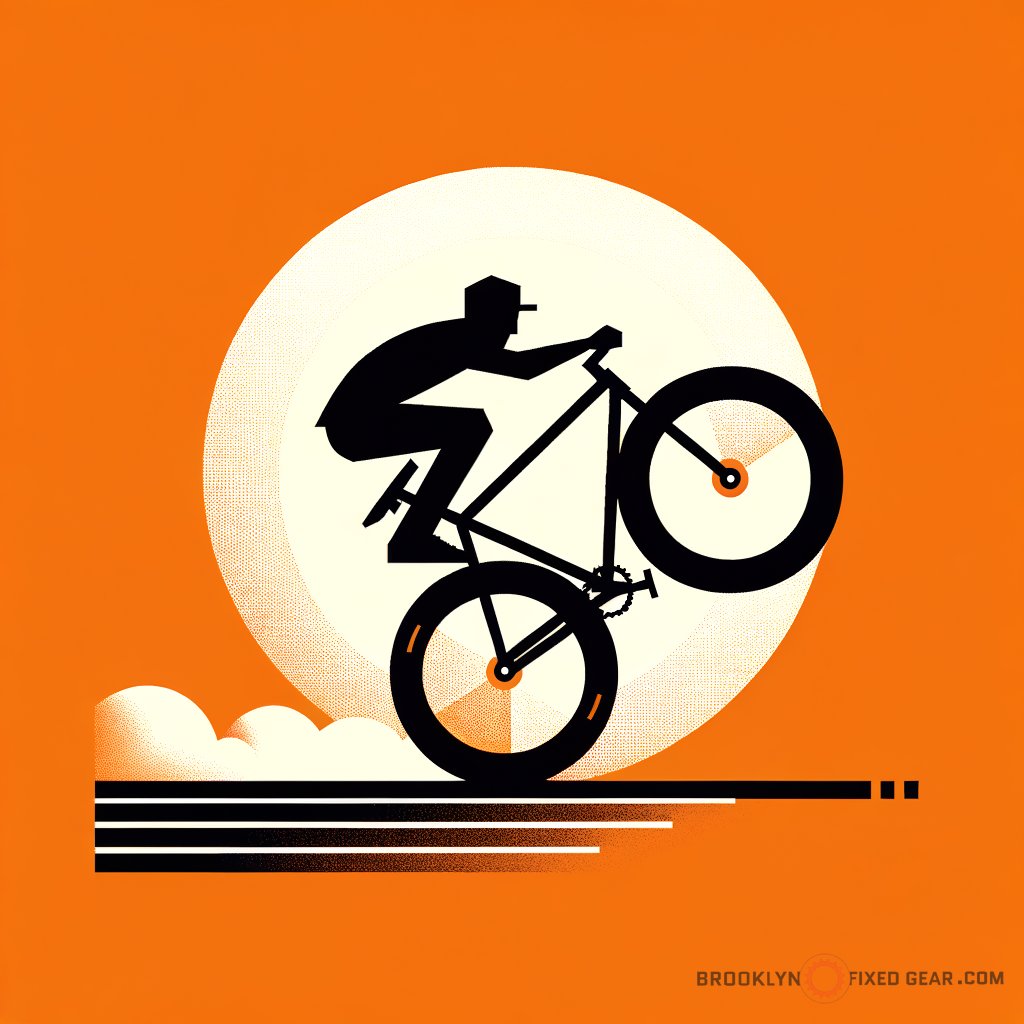
You can’t coast. Ever. At the balance point, you’re either:
- Feathering backward pressure (resisting forward pedal rotation)
- Micro-adjustments (tiny forward or backward pedal movements)
Your body position stays light on the saddle. The challenge is modulating power delivery to the cranks without the safety net of a freewheel. It’s finesse work, not brute force.
DO:
- Keep constant backward pressure
- Stay light on the saddle
- Keep arms slightly bent
DON’T:
- Try to coast (impossible)
- Yank bars without pedal timing
- Lock your elbows

Warning…
Looping out on a fixed gear is more dangerous than a freewheel because you can’t just bail—your feet are connected to spinning pedals. Always practice with a helmet and in an open area.
Common Mistakes That Kill Progress
Common Mistakes:
- Using freewheel technique – Trying to find a “coast zone” that doesn’t exist
- Wrong pedal position – Starting at 6 and 12 o’clock gives you zero leverage
- Not enough explosive power – The front wheel needs to come up fast
- Fighting the backward pressure – Embrace it—it’s your primary control mechanism
- Wrong gear ratio – Too high like 42/16 makes sustaining control difficult
Does Your Setup Matter?
Gear Ratios
For city riding and tricks, typical gear ratios range from 2.7 to 3.1. For wheelies, aim for the lower end. Most street riders run 48/17 (2.82 ratio).
Why 2.7-3.0 works best:
- Too spinny (under 2.5): Hard to generate explosive power
- Too heavy (over 3.2): Can’t maintain constant backward pressure
- Sweet spot (2.7-3.0): Enough resistance for control
| Gear Combo | Ratio | Wheelie Difficulty |
|---|---|---|
| 47/17 | 2.76 | Easy |
| 48/17 | 2.82 | Easy |
| 46/16 | 2.875 | Moderate |
| 48/16 | 3.0 | Challenging |
You can calculate your exact gear ratio to see where you’re at.
Frame Geometry
Track bikes with longer wheelbases and steeper angles make wheelies objectively harder. Riser bars provide more leverage for the initial pull compared to drops or pursuit bars.
Learning Progression
Stage 1: Master Track Stands First
If you can’t hold a rolling track stand for 10+ seconds, don’t even think about wheelies yet. The backward pressure you develop is exactly the muscle memory you need. Spend 2-4 weeks getting comfortable.
Stage 2: Short Hops (1-2 Seconds)
Focus on getting the front wheel up for just a moment. Find a slight uphill. Rolling at moderate speed, explosive pull + pedal stroke. Get that wheel up 20-30 times per session.
Stage 3: Sustained Balance (3-5 Seconds)
If you can hold a fixed gear wheelie for 5 seconds, you’re doing better than most fixie riders. The constant backward pressure required is exponentially harder than coasting on a freewheel.
For some riders this takes weeks. For others, months. And for many, it never fully clicks—and that’s okay.
Did you know?
The world record for longest wheelie is over 205 miles, set by Aaron Stannage in 2017. But here’s the catch: he did it on a freewheel bike. The fixed gear wheelie record? Nobody’s even attempting that because it’s basically impossible to sustain for more than a few seconds without your legs giving out from constant backward pressure.
Frequently Asked Questions
Frequently asked questions (FAQ)
Yes, but it’s scarier. Clipless makes it harder to bail when looping out. Many riders prefer platform pedals for learning, then switch to straps or clipless once confident. Foot retention gives better control but increases danger if things go wrong.
Risers, hands down. The more upright position gives you more leverage for the initial pull.
Slight uphill makes learning easier because gravity helps keep you back. Downhill wheelies are exponentially harder—you’re fighting both the locked drivetrain and gravity.
Final Thoughts
Fixed gear wheelies are objectively harder than freewheel wheelies. The locked drivetrain eliminates the coasting phase, forcing you into constant backward pressure and unicycle-level balance control.
With the right gear ratio (2.7-3.0), solid track stand fundamentals, and realistic expectations, short wheelies are absolutely achievable. Focus on that 3-5 second hold as your goal. Start with the progression: master track stands, get comfortable with short pops, then build toward sustained balance. And wear a helmet.
Sources
Sources and references
- Bike Forums – Popping and holding a wheelie: single speed vs. fixed gear
- Cycling UK Forum – Wheelies Discussion
- Bike Forums – Gear ratio for wheelies
- FOA – 42/18 ratio decent for wheelies?
- BROTURES GLOBAL – Understanding Gear Ratio and Skid Spots