Most cyclists who buy rollers eventually stop using them 😲. Not because they’re ineffective—but because staring at your garage wall while fighting to stay upright gets old fast.
So can bike rollers actually boost your cycling skills, or are they just expensive coat racks?
Rollers genuinely improve pedal stroke smoothness and make you hyperaware of your balance. But they’re mind-numbingly boring, can’t replicate real-world bike handling, and most riders would see better results from an extra hour outside per week.
TL;DR:
- Pedal stroke efficiency genuinely improves on rollers since sloppy technique makes you bounce around like you’re riding over railroad ties
- The “balance” benefit is oversold—you already know how to balance if you ride a bike; rollers just demand a different technique that doesn’t transfer well to the road
- Boredom is the real enemy here, with concentration required making it tough to zone out or binge Netflix like you can on a trainer
- Limited resistance means rollers won’t replace actual hill training or power work, though some models now offer magnetic add-ons
This breakdown covers what rollers actually improve versus the marketing BS, when they’re worth it, and when you’re better off just riding more.
A video titled “STUCK INSIDE? – These Indoor Bicycle Rollers Will Change Your Life!” from the Bicycle Touring Pro YouTube channel.
What Rollers Actually Do (And Don’t Do)
Rollers force you to ride on three spinning drums—two under your rear wheel, one under the front. No support. No locking mechanism. Just you, balance, and constant vigilance.
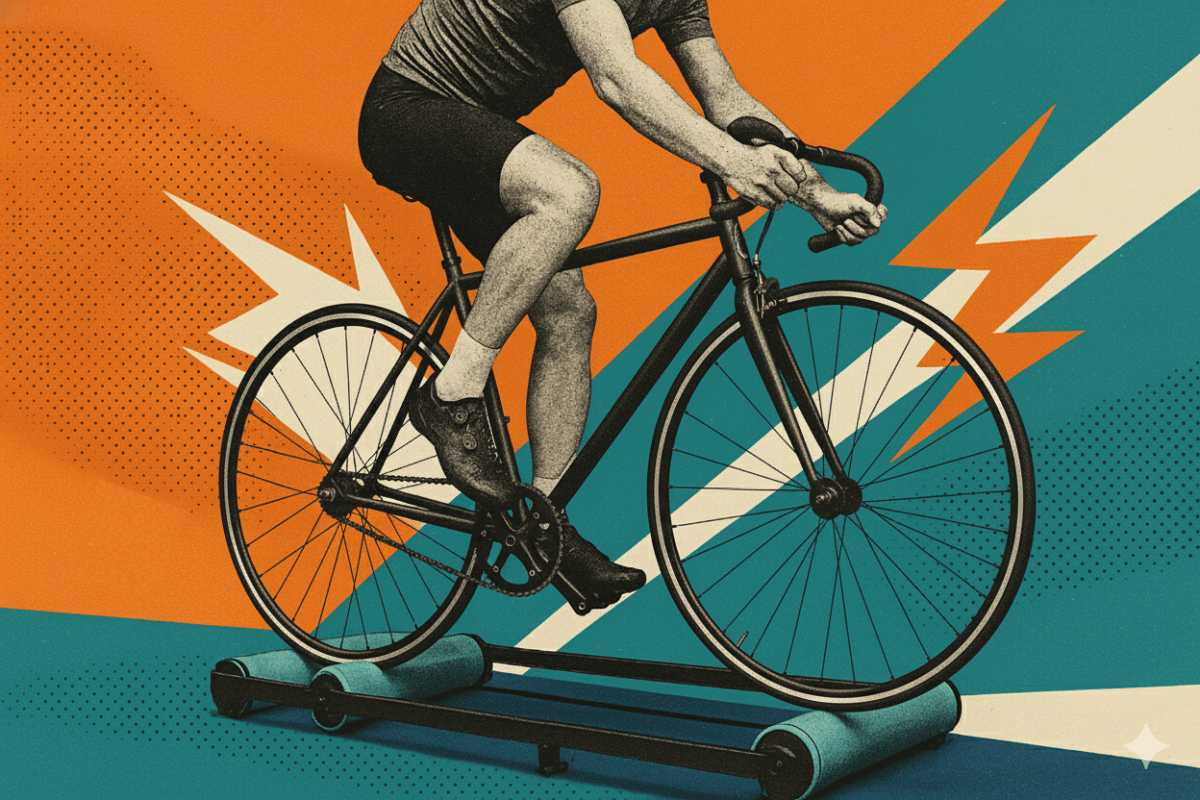
The setup mimics outdoor riding more than stationary trainers. Your bike moves beneath you naturally, the rollers absorb forward and backward motion during hard efforts, and jerky pedaling gets punished immediately.
If you’re mashing the pedals or rocking side-to-side, you’ll feel it. That constant feedback is what makes rollers effective for technique work.
The Skills That Actually Improve
Pedal stroke smoothness is the real deal. Rollers expose choppy pedaling ruthlessly. According to cycling coaches, high-cadence workouts on rollers create a perfect platform for developing fluid technique, which is why pro riders use them during off-season prep. On the road, you can power through dead spots in your stroke. On rollers? You’ll bounce and weave.
For fixed gear riders especially, this matters. You can’t coast away sloppy technique on a fixie, and riding fixed already demands smoother pedaling than freewheel bikes. Rollers amplify that requirement.
Core engagement happens whether you want it or not. When you first start, everything tenses up—your abs, back, shoulders, calves. One forum user described it perfectly: “After 10 minutes you’ll be knackered and more than likely your back, abs, shoulders and calves will ache to buggery.” That initial workout feel fades as you adapt, but your core stays active to maintain stability.
The Overhyped “Balance” Benefit
Here’s where the marketing gets murky. Roller advocates claim they dramatically improve balance and bike handling. The reality? “Rollers giving you ‘better balance’ is a bit of a myth,” according to experienced riders. You already know how to balance if you ride a bike.
What rollers actually teach is a different kind of balance—one specific to riding on rollers. And that technique? It doesn’t cross over to road riding much. Another rider noted “riding rollers demands a different technique to riding ‘normally’. The two techniques – such as they are – do not really cross over.”
Think about it: on the road, you handle by steering, shifting weight, and making constant micro-adjustments. On rollers, you’re locked into pedaling straight while micro-adjusting less to stay centered on narrow drums.
Useful for bike control in tight spaces? Maybe. Game-changing for your outdoor riding? Probably not.
What Rollers Can’t Do
Strength training isn’t happening. Rollers provide no resistance training at all—that comes from hills or actual resistance mechanisms. Standard rollers just spin easily. You can pedal fast and work your cardiovascular system, but you’re not building power.
Some rollers now offer magnetic resistance units (adding $100-200 to the price), but even then, you’re concentrating so much on staying upright that going truly hard becomes sketchy. One experienced rider explained: “I like rollers for an easy workout, more like active rest. It is much easier to use a resistance trainer for a hard workout where you are putting out a lot of power.”
Real-world bike handling stays on the real world. Rollers can’t teach you how to navigate sketchy descents, dodge potholes at speed, handle crosswinds, or ride in a tight pack. They can’t replicate sprinting out of the saddle (on most models), cornering, or any meaningful technical skill that matters on the road.
Rollers polish your pedal stroke. They don’t make you a better bike handler in traffic, better at reading the road, or more confident in real-world conditions. Those skills come from riding outside.
The Boredom Problem Nobody Talks About
Let’s address the elephant in the garage: rollers are tedious as hell.
You’re stuck staring at your wall, fighting to maintain perfect balance, unable to truly zone out or get lost in a hard effort. One rider who used Kreitler rollers for years finally admitted: “I got tired of having to concentrate just to stay on the damned things, so I moved to a smart trainer, and then to Zwift. Rollers can be great for requiring good form, but damn, that got old.”
That concentration requirement is exactly what makes rollers different from trainers. On a turbo trainer, you can watch movies, hammer intervals on Zwift, or follow structured workouts. Your bike’s locked in place. On rollers? Any distraction could send you sideways off the drums.
Sure, you can watch TV once you’re comfortable. But that takes weeks of practice, and even then, part of your brain stays engaged with balance. For winter training when you’re trapped indoors, that mental demand gets exhausting fast.

Fun Fact
The first time most people try rollers, they compare it to learning to ride a bike all over again. That initial wobble is universal, even among experienced cyclists with decades of saddle time.
The Attrition Rate
Many riders get bored or struggle with balance and simply give up. One practical recommendation from the cycling community: if you’re considering rollers, start with something cheap.
If you quit within a few months, you’re only out $60 instead of $300. “It is easier to swallow selling something for $60 that I paid $100 for than paying $300 and having it take up space in my garage.”
That’s the voice of experience.
When Rollers Actually Make Sense
Rollers aren’t worthless. They’re just specific-use tools that work best in certain scenarios.
You’re Prepping for Track or Criterium Racing
Rollers excel as warm-up equipment for high-intensity, short races. They’re portable, quick to set up, and get your legs spinning before you pin on a number. That’s why you see them at velodromes and crit races—not as primary training tools, but as pre-race prep.
If you’re serious about track racing on your fixed gear, rollers help you dial in your warm-up routine and work on that silky-smooth pedal stroke that matters when you’re pinned at 130 RPM in a sprint.
You Want Pedal Technique Drills
For riders focused on improving cadence work and pedal efficiency specifically, rollers provide instant feedback. You can practice single-leg drills (unclipping one foot), high-cadence intervals (hitting 120+ RPM smoothly), and form-focused sessions where the goal is smoothness over power.
One cycling coach recommended: “Ride rollers three times a week for four weeks and I guarantee that you will see improvements” in pedaling, balance, and focus. That’s a reasonable commitment to test their effectiveness.
Space and Budget Are Tight
Basic rollers cost $150-270 (compared to $400-1500+ for smart trainers) and fold up to slide under a bed or stand vertically in a closet. No rear wheel removal, no special setup, no power requirements. Just unfold, place your bike on them, and go.
For apartment dwellers or riders without dedicated training space, that simplicity matters. Rollers also work with any bike without modifications—road, mountain, fixed gear, whatever. Your fixed gear setup goes straight from street to rollers and back.
When You’re Better Off Without Them
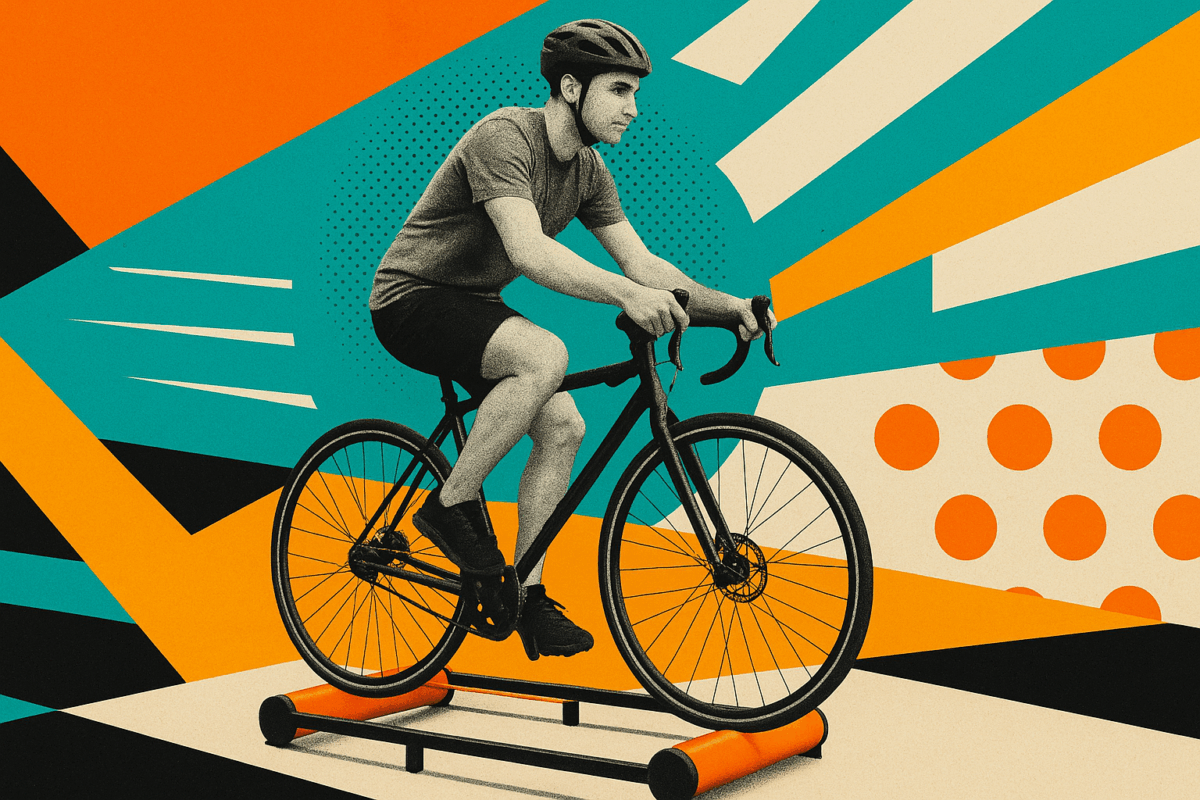
If your goal is fitness, get a trainer instead. Smart trainers offer structured workouts, connect to apps like Zwift and TrainerRoad, and provide controllable resistance for proper interval work. You can do VO2 max efforts, hill simulations, and race others virtually—all while your bike’s locked in place so you can actually suffer properly.
If you need variety to stay motivated, rollers will disappoint. They’re one-dimensional. Pedal smooth, don’t fall off, repeat. After a few weeks, that novelty wears thin.
If you have limited training time, spending 30 minutes concentrating on not crashing seems like a waste when you could be outside actually riding. Or indoors doing a focused trainer workout that builds real fitness.
Warning…
Falling off rollers happens to everyone. The “big offs” typically come when you get cocky. One rider’s best dismount story involved demonstrating an on-bike dismount in about a foot of clear space—then falling into someone’s top tube and nearly snapping their bike in two. Set up in a doorway, stay humble, and accept that you’ll probably eat it eventually.
When Rollers Make Sense
- Racing track or crits regularly
- Focused on pedal technique work
- Limited space and budget
- Already comfortable on a bike
- Enjoy the challenge and focus
When to Skip Them
- Primary goal is fitness/power
- Need variety to stay motivated
- Want structured interval training
- Limited time for training
- Easily bored by repetitive tasks
Getting Started If You Actually Buy Them
Despite everything, maybe you’re still intrigued. Here’s how to not immediately regret your purchase.
Start in a doorway. Not negotiable. Set up the rollers between a narrow doorframe so your shoulders are at wall-level. This gives you something to grab when (not if) you start drifting sideways. Most people need about 2-4 sessions in the doorway before they’re comfortable enough to ride unsupported.
Wheel speed is your friend. The faster your wheels spin, the more stable you become. Riding too slow in an easy gear makes balance harder. Aim for a moderate gear (something like 48×17 on a fixed gear) that lets you maintain 85-90 RPM without struggling.
Don’t death-grip the bars. Tension makes balance worse. Relax your upper body, look forward (not down at your wheel), and let the bike move naturally beneath you. That initial instinct to clench everything? Fight it.
Price Breakdown and Options
| Roller Type | Price Range | Best For |
|---|---|---|
| Basic Rollers (Nashbar, CycleOps) | $140-200 | Testing if you’ll actually use them |
| Mid-Range (Tacx Galaxia, Elite) | $220-330 | Most riders; balance of features and cost |
| Premium (Kreitler, E-Motion) | $300-900 | Serious users, racing, longevity |
| Smart Rollers (Elite Arion Digital) | $400-600 | Want app connectivity and resistance |
The Tacx Galaxia (around $270) hits a sweet spot with its rocking base system that absorbs surge movements, making standing efforts possible. The parabolic drums help keep you centered. It’s what I’d buy if I were buying today.
Kreitler rollers ($300-400) are the “Rolls-Royce” of the category—aircraft-grade aluminum, ABEC-5 bearings, built to last decades. But one reviewer noted they’re not dramatically different enough from cheaper options to justify the cost for most riders.
For budget-conscious testing, check used markets. Rollers don’t wear out much, and people sell them constantly (because they don’t use them). You can find decent sets for $60-100 on Craigslist or eBay.
The Fixed Gear Advantage
Fixed gear bikes actually work better on rollers than freewheel bikes for one simple reason: you can’t coast anyway.
On a freewheel bike, riders instinctively try to coast when they start losing balance. That kills momentum and makes recovery harder. On a fixed gear, coasting isn’t an option. You keep pedaling through balance corrections, which is exactly what rollers demand. One forum user confirmed: “I think almost everything is easier done on the fixed gear bicycle. It’s the freewheeling that throws people off.”
Since you can’t stop pedaling on a fixed gear even when things get sketchy, your technique stays consistent. No panic-coasting, no choppy acceleration. Just smooth circles—which is what rollers reward.
Gear selection matters though. Most fixed gear riders on rollers run something moderate (65-75 gear inches) to allow comfortable spinning without topping out. That 46×17 or 48×18 range works well for most indoor sessions.
The hours you’d spend grinding away on rollers, fighting boredom and concentration fatigue, would almost always be better spent outside. Real roads teach real skills.
The Bottom Line
Rollers genuinely improve pedal stroke smoothness and heighten your awareness of balance and form. If you’re preparing for track racing, working on specific technique drills, or need ultra-portable warm-up equipment, they’re useful tools.
But they’re boring. They’re limited. And they can’t replace actual riding.
The hours you’d spend grinding away on rollers, fighting boredom and concentration fatigue, would almost always be better spent outside. Real roads teach real skills—handling, reading traffic, bike control at speed, confidence in varied conditions. Rollers teach you how to ride rollers well.
If you’re stuck indoors genuinely often—brutal winters, safety concerns, impossible schedules—smart trainers offer more bang for your buck with structured workouts, resistance control, and app integration. For technique work specifically? Sure, rollers have a place.
Just don’t buy into the hype that they’re essential or transformative. They’re a niche tool that works for specific goals and specific riders. If you’re still curious after reading all this, start cheap, start in a doorway, and see if you’re one of the few who sticks with them.
Most people aren’t.
Frequently Asked Questions
Frequently asked questions (FAQ)
Most riders can balance independently after 3-5 sessions, though true comfort takes 2-3 weeks of regular practice. The learning curve is steep but short. Using a doorway for support during those first few rides makes the progression less intimidating and prevents most crashes.
Standard rollers work for moderate efforts but get sketchy at very high intensities since balance becomes harder. E-Motion rollers with their floating platform allow proper standing sprints, but they cost $800+. For serious power intervals, trainers are more practical and safer.
Nope. Your regular tires work fine, though smoother tread patterns are easier than knobby mountain bike tires. Higher tire pressure (90-110 PSI for road tires) rolls better on the drums. Keeping your tires properly inflated matters more than tire selection.
Mid-range to premium rollers (Kreitler, Tacx, Elite) run fairly quietly—comparable to conversation volume. Cheap rollers with lower-quality bearings can be annoyingly loud. The main noise comes from your chain and drivetrain, plus any vibration from the floor. A rubber mat underneath helps dampen sound transmission to neighbors below.
Final Thoughts
Here’s what it comes down to: rollers are a tool, not a magic solution. They’ll smooth out your pedal stroke and force better technique. But the real magic? That happens outside, on actual roads, where you build the skills that matter.
If winter keeps you trapped indoors for months, or you’re serious about track racing and need specific warm-up equipment, rollers might make sense. Otherwise, that $200-300 you’d drop on rollers could buy better tires, a solid maintenance stand, or fund more group rides and events.
What’s your take—are you team rollers or team “just ride more”?