


TL;DR:
- True flat bars have 0mm rise – this creates an aggressive, forward-leaning position for maximum speed
- Bar width should match your shoulder width plus 2-4cm, typically 520-620mm for urban fixed gear riding
- Backsweep ranges from 5-11° with 6-8° being most common for comfort without compromising the aggressive position
- The top three bars include the budget Origin8 Pro Pulsion ($29), mid-range Surly Cheater Bar ($80-104), and premium Thomson Carbon ($202)
- 31.8mm clamp diameter dominates modern builds while 25.4mm suits classic builds
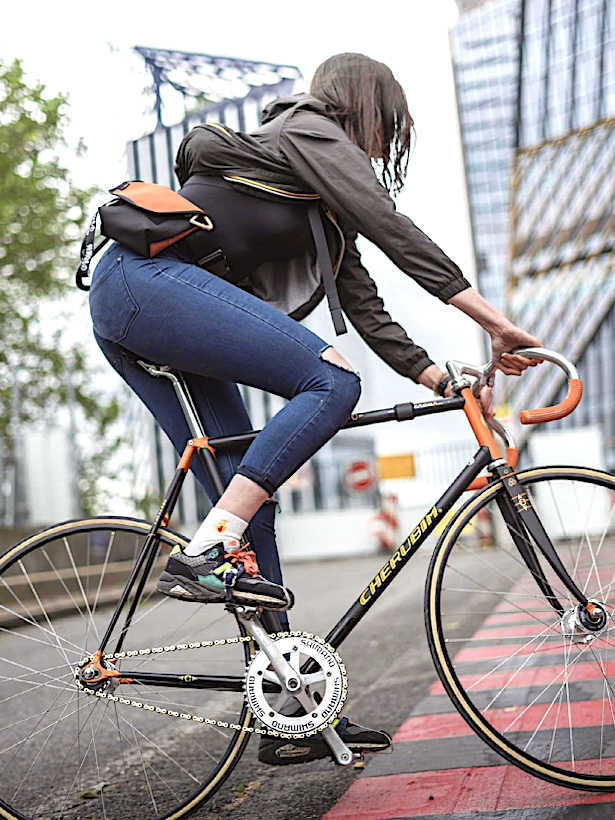
Most fixed gear riders choose flat bars for the wrong reasons—or confuse them with riser bars entirely. That aggressive track bike aesthetic 🚴 looks cool, but only if you actually get true flat bars with 0mm rise.
Flat bars (0mm rise) are aggressive speed machines 💪 with forward positioning, superior aerodynamics, and maximum power transfer. But comfort versus pain comes down to three things: understanding that flat means 0mm rise, matching bar width to your shoulders, and selecting proper sweep angles.
A video titled “BIKE HANDLEBARS EXPLAINED [FIXED GEAR]” from the FOAD Gang YouTube channel.
1. What Makes a Bar “Flat”? Understanding 0mm Rise
Critical definition: True flat bars have 0mm rise. This means the handlebar grips sit at the exact same height as the stem clamp—completely horizontal with no upward angle whatsoever.
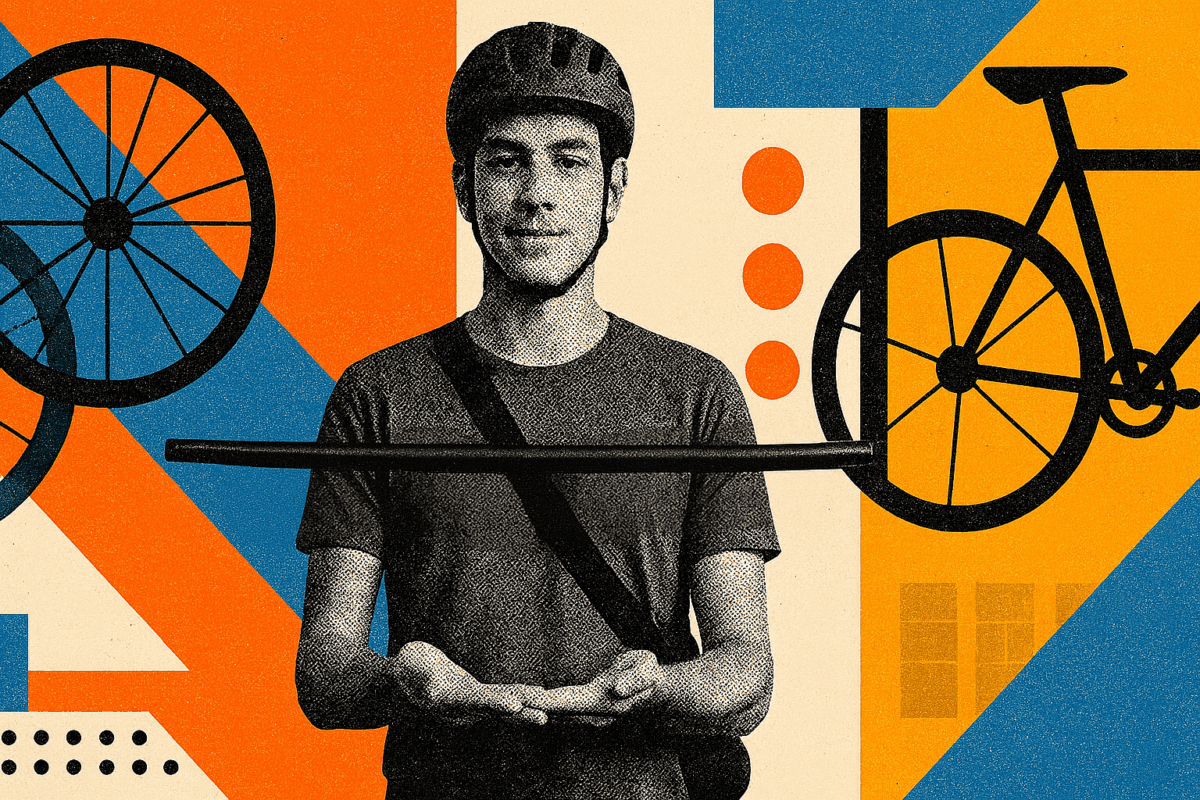
Flat bars vs. Riser bars – These are COMPLETELY DIFFERENT:
- Flat bars: 0mm rise → Aggressive, forward-leaning position ideal for track bikes and fast urban riding where speed matters
- Riser bars: 10-40mm+ rise → More upright, comfortable position for casual riding and technical terrain
If you see bars advertised as “10mm rise” or “25mm rise” – those are riser bars, not flat bars. This article covers ONLY true flat bars (0mm rise) for aggressive fixed gear riding.
True flat bars create the most aerodynamic position possible with straight handlebars, putting your torso low and forward. This maximizes power transfer and speed but requires good core strength and flexibility. If you find yourself hunching or experiencing back pain after 30 minutes, you need either a shorter stem, more spacers, or riser bars instead.

Did you know?
Flat bars with 0mm rise are popular with XC riders and track cyclists because the aggressive position keeps weight over the front wheel for maximum control during climbs and sprint sections. The lower hand position reduces wind resistance significantly compared to riser bars.
2. Bar Width: The Make-or-Break Measurement
Bar width fundamentally determines control, breathing, and shoulder health. For fixed gear urban riding with flat bars, 520-620mm typically represents the practical range—wide enough for confident control without clipping car mirrors or doorways.
This is narrower than mountain bike flat bars (which run 720-800mm) because:
- Urban environments require navigating tight spaces
- The aggressive position of flat bars doesn’t need as much leverage as technical MTB riding
- Narrower bars improve aerodynamics for speed-focused riding
The standard recommendation: start 2-4cm wider than your shoulder width measured acromion to acromion (those bony protrusions where collarbones meet shoulders).
A more practical test? Measure your hand spacing during a pushup at your strongest position—this reveals your natural power stance and often matches ideal bar width better than static measurements.
Modern bars feature graduated markings every 5-10mm, allowing you to test narrower widths by sliding controls inboard before permanently cutting. Always start wide and trim gradually—you can’t add width back after cutting.

Warning…
The most expensive mistake: cutting bars too short immediately after purchase. Width cannot be added back. Test thoroughly by sliding grips and controls inboard for 15+ hours before making any cuts.
3. Sweep Angles: The Detail Most Riders Ignore
Backsweep (viewed from above) on true flat bars typically ranges 5-11°, with 6-8° being most common. This angle should match the natural sweep of your arms when extended to riding position.
Insufficient backsweep can force wrists into uncomfortable extension, causing ulnar nerve compression—that numbness in your pinky and ring fingers. Too much backsweep (over 11°) starts to feel awkward in the aggressive flat bar position.
Upsweep (viewed from side) on true flat bars is typically 0-2° – minimal or none. Many pure flat bars have 0° upsweep to maintain the aggressive, aerodynamic position. Anything over 4° upsweep starts turning a “flat” bar into a low-riser bar.
Common flat bar sweep configurations:
- Origin8 Pro Pulsion: 6° backsweep, 0° upsweep – traditional balanced flat bar
- Surly Cheater Bar: 11° backsweep, 0° upsweep – maximum comfort while staying flat
- Salsa Salt Flat: 11° backsweep, 6° upsweep, 0mm rise – technically still “flat” but the upsweep adds comfort
4. Clamp Diameter: Compatibility You Can’t Ignore
The 31.8mm “oversized” standard dominates modern bikes, offering massive component selection and superior stiffness. The older 25.4mm (1-inch) standard provides more compliance but limits component choices—fewer manufacturers produce quality 25.4mm bars today.
These sizes are NOT interchangeable without shims (which add weight and reduce stiffness). Before buying bars, verify your stem clamp diameter with calipers—don’t assume based on bike age.
31.8mm Clamp
- Modern standard since 2010
- Massive component selection
- Superior stiffness for responsive handling
- Works with all modern stems
25.4mm Clamp
- Classic standard
- Better vibration damping
- Limited modern selection
- Perfect for vintage builds
5. Material Choices: Aluminum, Carbon, or Steel
Aluminum alloy dominates flat bar construction—specifically 6061-T6 for mid-range bars and 7050/7075 for premium options. A double-butted 6061 bar in typical fixed gear widths (520-640mm) weighs 175-340g and costs $29-60, representing the standard recommendation for most riders.
Double-butted construction means thicker walls at both ends (where stress concentrates) and thinner walls in the center, saving 20-30% weight versus single-wall bars while maintaining strength.
Premium 7050/7075 alloys offer higher tensile strength, allowing thinner walls—typically 150-280g for similar dimensions but often costing 1.5-2x more ($60-120 vs $29-60) for modest 30-60g weight savings.
Carbon fiber bars promise dramatic weight reduction—typically 180-220g compared to 280-340g for aluminum in similar widths, saving 60-160g.
Carbon provides superior vibration damping while reducing weight. This performance costs dearly: entry carbon starts at $145-180, mid-range runs $180-250, premium reaches $300-400+.
Carbon fails catastrophically without warning when damaged, requiring meticulous inspection after crashes and proper torque specs (typically 4-5Nm vs 5-6Nm for aluminum).
Steel chromoly bars offer exceptional durability and compliance. The Surly Cheater Bar weighs 400g in 780mm width but can be trimmed to 600-650mm for urban use. Steel bars are heavier than aluminum but provide superior vibration damping and legendary toughness—they bend before they break.
| Material | Weight (520-640mm) | Price Range | Best For |
|---|---|---|---|
| Aluminum 6061-T6 | 175-340g | $29-60 | Most riders, best value |
| Aluminum 7050/7075 | 150-280g | $60-120 | Weight-conscious builds |
| Carbon Fiber | 180-220g | $145-400+ | Premium builds, rough streets |
| Steel Chromoly | 400g (at 780mm, trimmable) | $80-104 | Durability, compliance, classic aesthetic |
6. Installation Setup That Prevents Chronic Pain
Apply appropriate lubricant based on materials: medium-strength threadlocker or light grease for aluminum-on-aluminum interfaces, carbon assembly compound (Park Tool SAC-2 or similar) for carbon bars. Never use standard grease on carbon—it reduces friction too much, requiring over-tightening that risks cracking.
Install the new bar centered in the stem with controls removed initially. Partially tighten stem bolts, then stand over the bike and rotate bars to optimal angle. With flat bars (0mm rise), you’ll typically rotate them slightly forward to get wrists aligned naturally with forearms when gripping bars.
Tighten stem bolts in X-pattern to proper torque: typically 5Nm for stems, though always check manufacturer markings.

Critical warning!
The critical mistake beginners make: over-tightening or under-tightening bolts. Carbon bars typically require 4-5Nm torque while aluminum tolerates 5-6Nm—a torque wrench isn’t optional for carbon components. Over-tightening cracks carbon; under-tightening allows slippage during riding.
Brake lever positioning requires precision. Most modern brake systems operate with one or two fingers, so levers should be positioned inboard from traditional locations—aim for best leverage with just your index finger.
Lever angle should approximate 4 o’clock position (viewed from drive side), NOT parallel to ground despite this being trendy.
Testing bar width before cutting prevents irreversible mistakes. Slide grips and controls inboard to simulate narrower width. Calculate: (Current width – Target width) ÷ 2 = Distance to move each side inboard. Ride this setup for 15+ hours across various conditions before committing to cuts.
Three Flat Bars I Recommend

Pro tip
Pair the Thomson carbon bar with their X4 stem for optimized stiffness and aesthetics. The combination weighs under 280g total while providing legendary durability and precise handling.
Frequently asked questions (FAQ)
No—converting from drop bars to flats typically requires a 30-40mm longer stem because flat bars move hand position approximately 10cm rearward compared to drop bar hoods. You’ll also need different brake levers (MTB-style instead of road levers) which cost $20-50 versus $100-300 for road brake levers. Some road frame geometries simply don’t convert well to flat bars regardless of stem adjustments.
Stand over your bike in riding position and grip the bars naturally. If your elbows splay outward significantly, bars are too wide. If your shoulders hunch forward and you feel chest compression, bars are too narrow. Ideally, elbows should flex downward naturally (not flare out), shoulders should remain relaxed without elevation, and wrists should align relatively straight with forearms.
For carbon bars—absolutely yes. Carbon requires precise torque (typically 4-5Nm for stem bolts) that feeling alone cannot reliably deliver. Over-tightening cracks carbon catastrophically; under-tightening allows bars to rotate during hard efforts. For aluminum bars, you can get away without a torque wrench if experienced, but a quality 2-10Nm torque wrench costs $30-60 and serves you for all bike components requiring precision.
Yes, for sustained speeds over 20mph or rides exceeding 20 miles. The upright position creates a “sail effect”—your torso catches wind, increasing drag significantly. However, for stop-and-go urban riding under 15-20 miles where speeds average 12-18mph, the aerodynamic disadvantage is often negligible compared to flat bars’ superior low-speed control, instant brake access, and better visibility in traffic. Choose based on your actual riding, not aspirational speeds.
Yes, and they help address flat bars’ main limitation: single hand position causing cramping after 20 miles. Quality bar ends ($25-50) provide 2-3 alternate positions, preventing numbness and fatigue on longer rides. Ergon GP1 or similar ergonomic grips ($30-50) with built-in bar ends work well. If you routinely ride over 15-20 miles, bar ends or ergonomic grips can significantly improve comfort.
Final Thoughts
True flat bars (0mm rise) excel when matched to appropriate use cases and sized correctly for individual riders.
They transform fixed gear bikes into aerodynamic speed machines with aggressive positioning and maximum power transfer—but only when you understand that flat means 0mm rise, get width right, and select proper sweep angles.
Start with the measurement that matters most: your shoulder width plus 2-4cm determines ideal bar width. For most urban fixed gear riders with flat bars, this lands in the 520-620mm range.
Don’t overthink materials: double-butted aluminum delivers 95% of the performance at 40% of carbon’s cost. If you need the aggressive positioning and aerodynamics of flat bars, the Origin8 Pro Pulsion ($29) gets you started right.
When ready to upgrade, the Surly Cheater Bar ($80-104) provides bombproof steel durability. Only go carbon if you’re chasing every gram or need maximum vibration damping.
Your bar choice matters less than getting the fit right—a perfectly-sized budget bar outperforms expensive bars that don’t match your body. And remember: if you want an upright position, you don’t want flat bars—you want riser bars.
Sources and references
- Modern Bike – Origin8 Pro Pulsion Specifications
- Surly – Cheater Bar Specifications
- Thomson – Carbon Handlebar Specifications
- TBS Bike Parts – How Handlebar Rise & Sweep Affect Your Ride
- BikeGremlin – Bicycle Handlebar Dimension Standards
- Park Tool – Handlebar Removal & Installation
- Bike Forums – Flat bar width discussions
- MTBR Forums – Flat bar specifications and user experiences