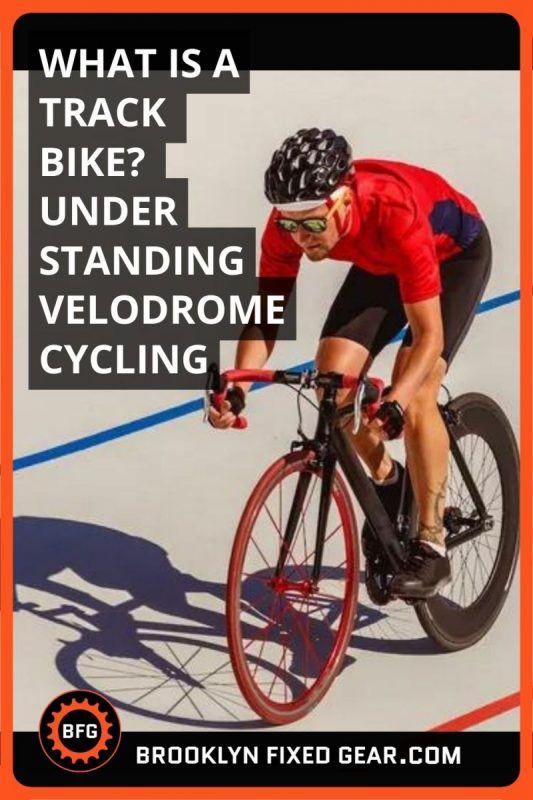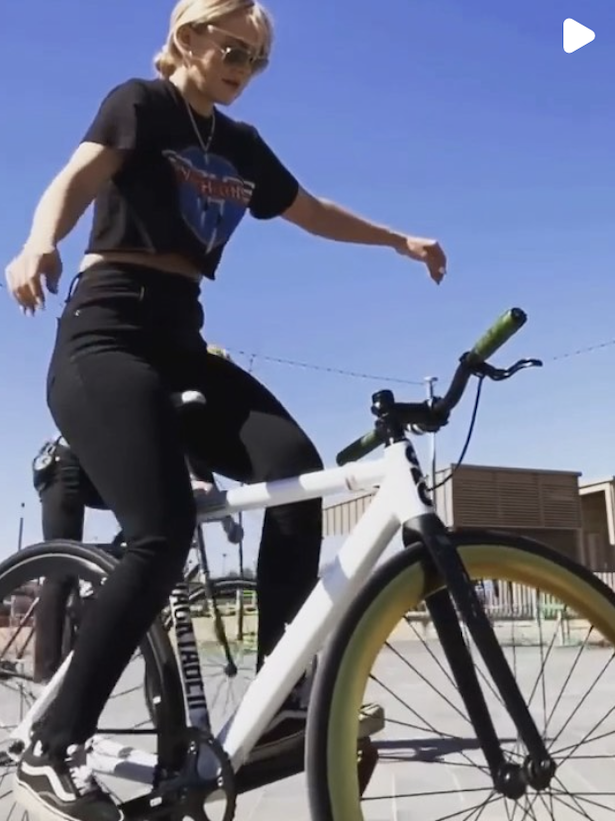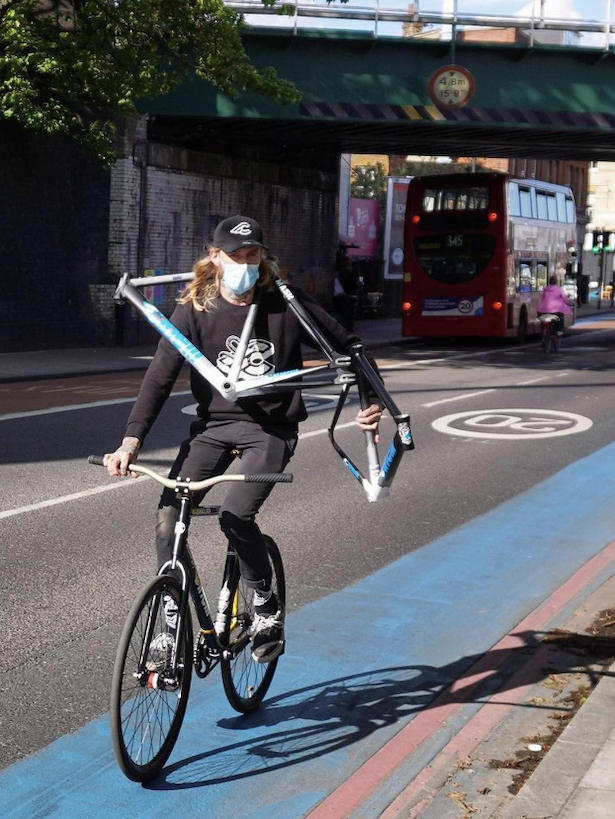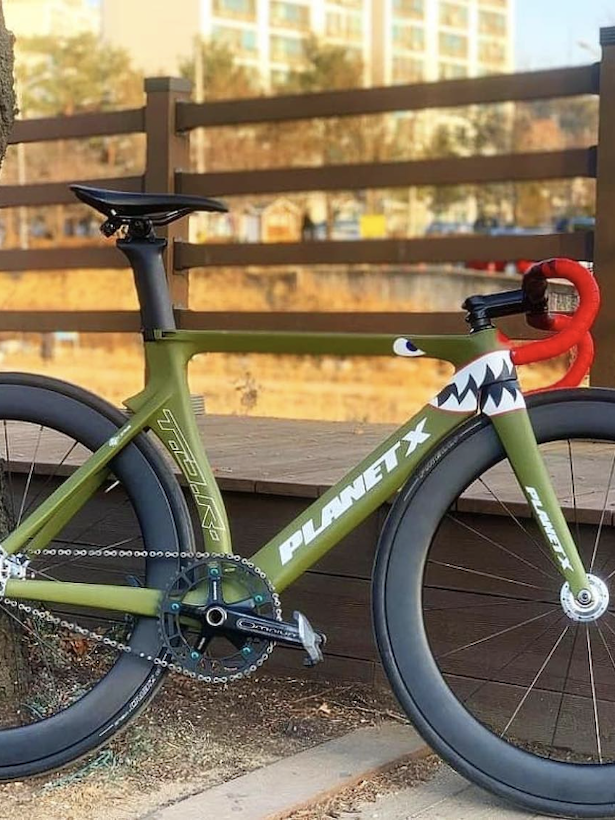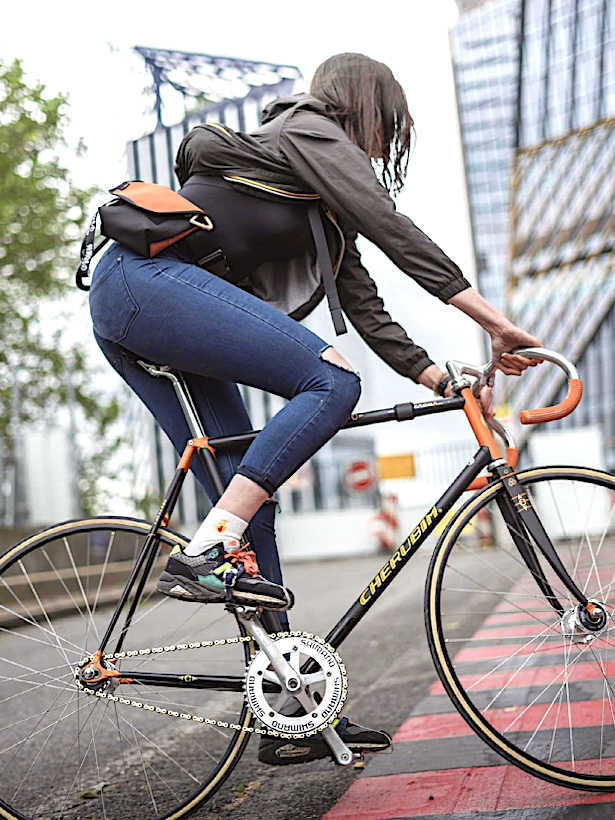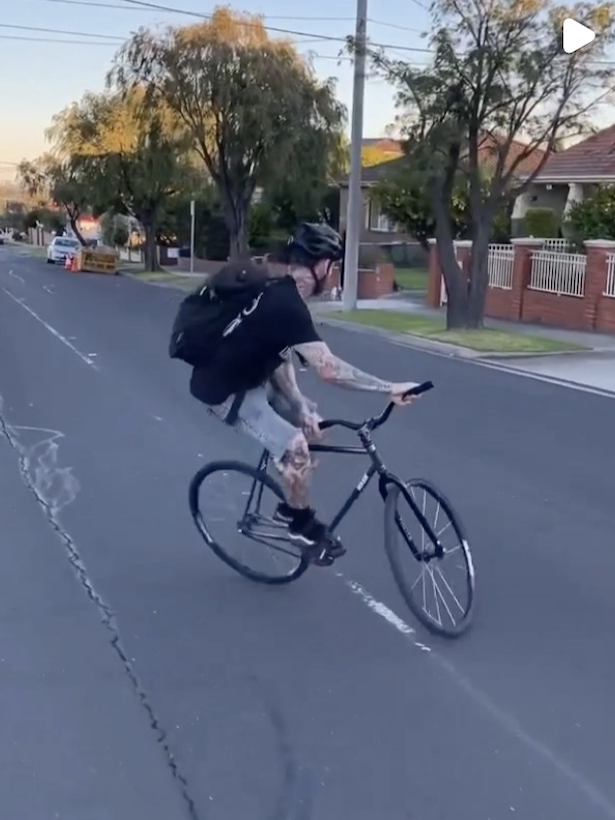

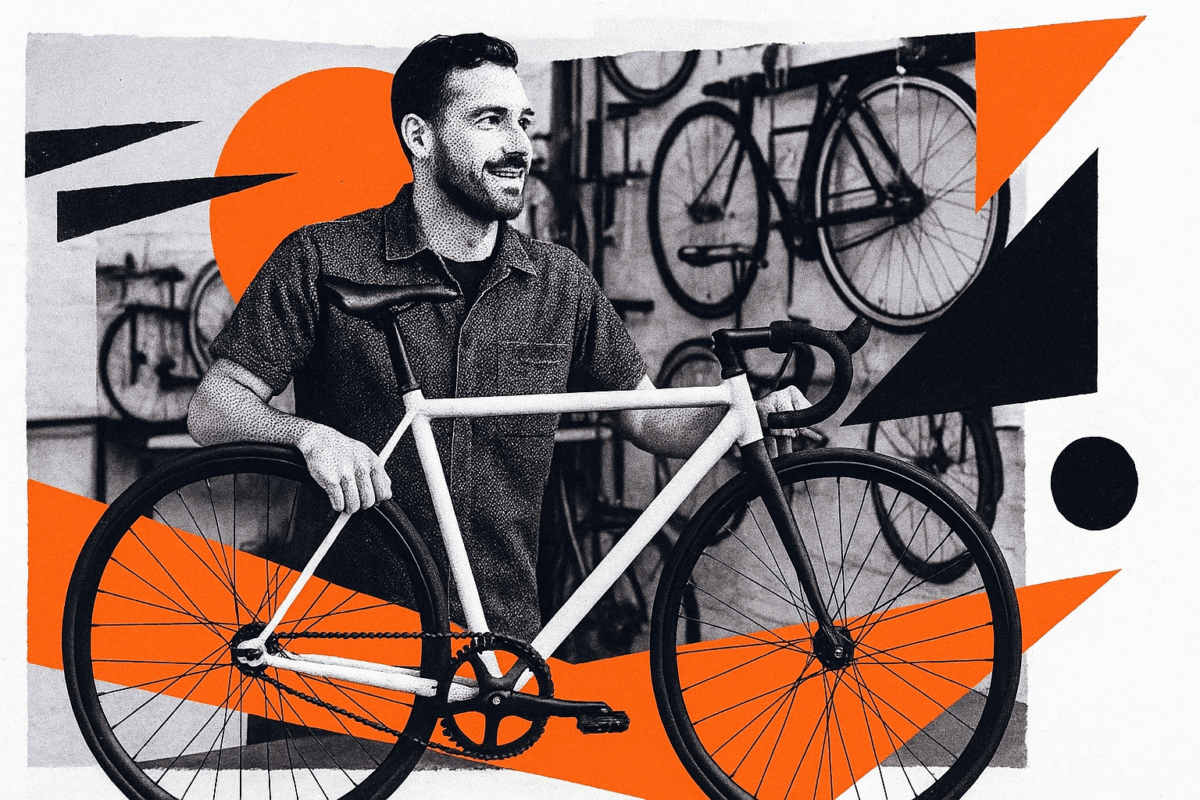
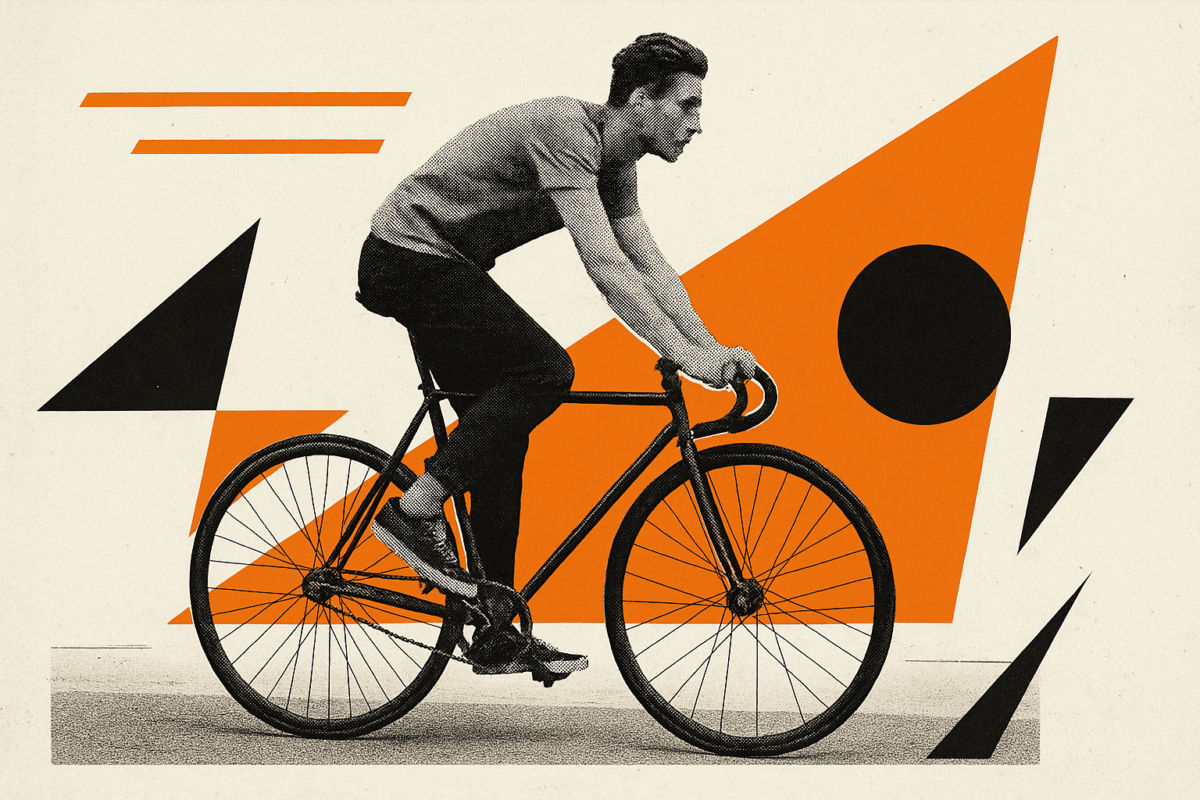
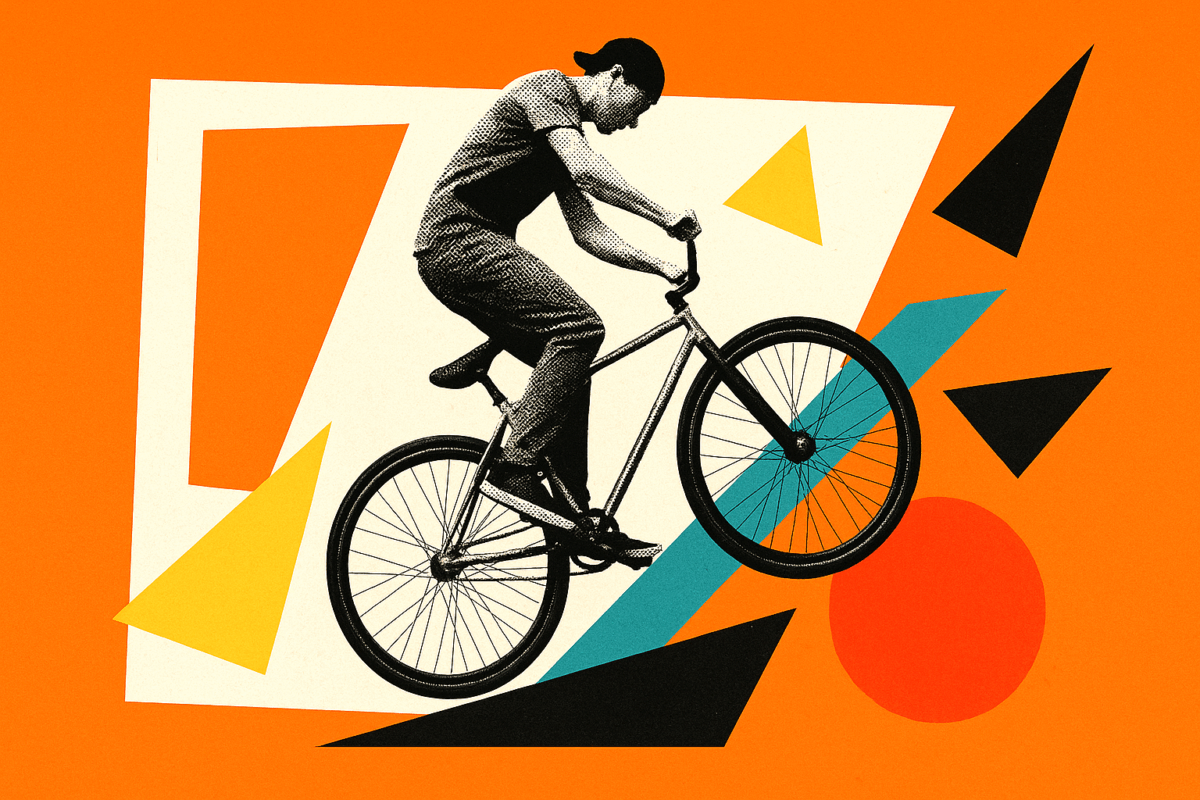
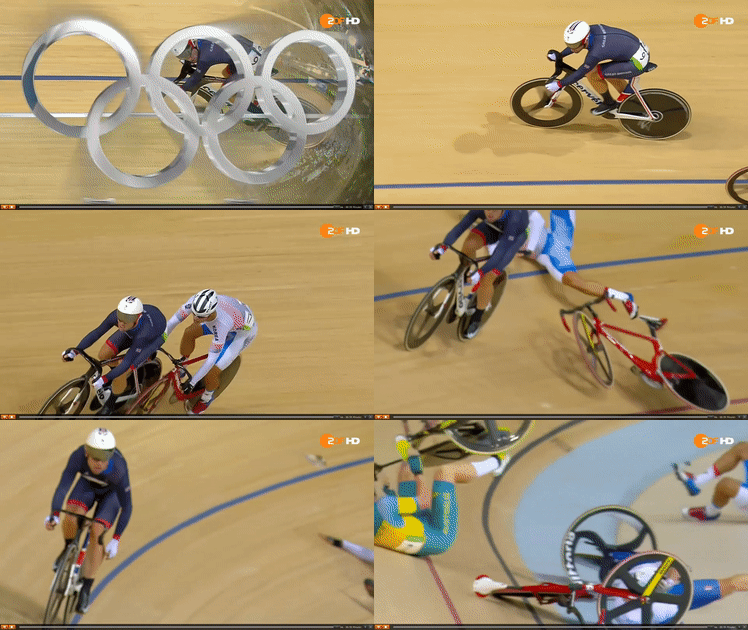
Track bikes are the purest form of bicycle you’ll ever see. No gears. No brakes. No BS. Just you, a fixed gear, and physics doing its thing at 40+ mph around a banked velodrome. 🔥
These machines are stripped down for one specific purpose: going fast in circles on steeply banked tracks. They look insane compared to your neighborhood road bike.
TL;DR:
- Track bikes use fixed gear with no brakes—when wheels move, pedals move, and your legs are the only brake
- Design is physics-driven: brakes on 45-degree banking cause you to slide down like a cartoon character
- Street use is often illegal without brakes in many US cities, plus aggressive geometry makes them twitchy
- Start with velodrome rentals: ~21 US tracks offer beginner programs before dropping $2,000+
This guide breaks down what makes track bikes different, why the radical design choices make sense, and whether you should ride one on the street (spoiler: probably not). 💡
A video titled “What is a Track Bike?” from the BikeRadar YouTube channel.
The Stripped-Down Truth About Track Bikes
A track bike is built exclusively for velodrome racing—those steeply banked oval tracks that look like a NASCAR track. What makes them different? Everything.
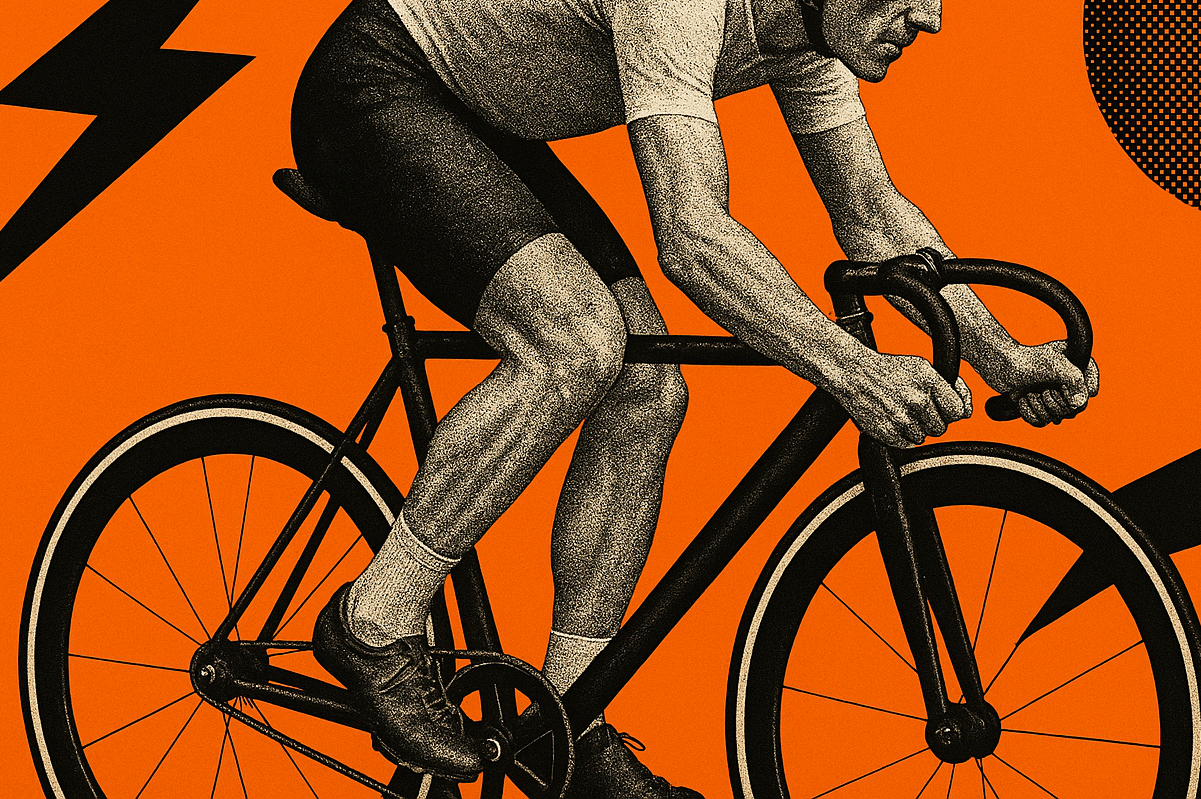
Track bikes use fixed gear, meaning the rear cog threads directly onto the hub. When wheels move, pedals move. No coasting. No freewheeling. No taking your feet off the pedals to rest. If you’re new to understanding how fixed-gear bikes work, this constant connection takes serious getting used to.
Here’s why that matters: you’re always connected to the bike’s momentum. Going downhill? Those pedals are spinning whether you want them to or not. Need to slow down? You resist the pedal rotation with your legs.
It’s a completely different riding experience from the coasting you’re used to on a road bike.
It’s a completely different riding experience from the coasting you’re used to on a road bike — no brakes. Not front. Not rear. Nothing.
Your brake is your legs fighting against the momentum of a 15-pound bike moving at highway speeds. You slow down by resisting pedal rotation, which requires serious leg strength and intimate knowledge of your machine.
Think of it like engine braking in a manual transmission car—you’re using the drivetrain itself to control your speed.
Why They’re Built Like This
This isn’t aesthetic—though it looks sick. Track bikes need this design because the velodrome demands it.
You’re riding in a controlled space. No cars. No pedestrians. No unexpected obstacles. Just smooth wooden or concrete surfaces banked at up to 45 degrees. The predictability of this environment allows designers to strip away everything non-essential.
Brakes become dangerous here. Brake mid-turn on a 45-degree bank and you lose the centrifugal force keeping you pinned to the track. You’d slide down the banking like a cartoon character on a banana peel. 💀

Critical warning!
On velodromes, braking in turns means losing the physics keeping you on track. Centrifugal force (outward) plus gravity (downward) creates net force perpendicular to the track surface—brake and that balance collapses.
This is why track racing is often safer without brakes. In tight pack racing at 35+ mph, one rider grabbing brakes could cause a massive pile-up. The fixed gear means everyone’s speed changes are gradual and predictable, not sudden and catastrophic.
The fixed gear provides constant feedback. You feel every acceleration, every change in cadence, every micro-adjustment through your legs. This creates an almost telepathic connection between rider and bike.
Track cyclists often describe it as becoming one with the machine—your legs are literally part of the drivetrain.
Plus, removing components means removing weight and potential mechanical failures. Track bikes weigh 13-15 pounds—lighter than most laptops.
By comparison, a typical road bike weighs 18-22 pounds, and that extra weight matters when you’re accelerating out of corners dozens of times in a single race.
Now let’s look at the actual arena where these machines come alive.
The Velodrome: Where These Beasts Live
Velodromes are purpose-built racing facilities with banking that makes you question gravity. The first time you see one in person, the steepness is genuinely shocking—it looks like a wall, not a rideable surface.
Standard Olympic tracks are 250 meters around with banking starting at 12 degrees in straights and ramping to 42-50 degrees in turns. Smaller tracks have even steeper banking because physics demands it for tighter turns at speed. The relationship is simple: shorter track = steeper banking to maintain the same racing speeds.
Riding the banking means going horizontal in turns. Your bike leans so far that your shoulder gets closer to the track surface than your handlebars.
You’re not defying physics—you’re obeying them perfectly. New riders at velodromes often report that the banking feels steeper when riding at slow speeds during training, which is actually correct—you need speed to make the physics work in your favor.
The track surface matters. Most modern velodromes use smooth Siberian pine or concrete. No cracks. No debris. No weather. Just consistent grip and predictable speed.
Indoor velodromes using wooden surfaces are often considered faster than outdoor concrete tracks because the wood has slightly more grip and is smoother with less rolling resistance.
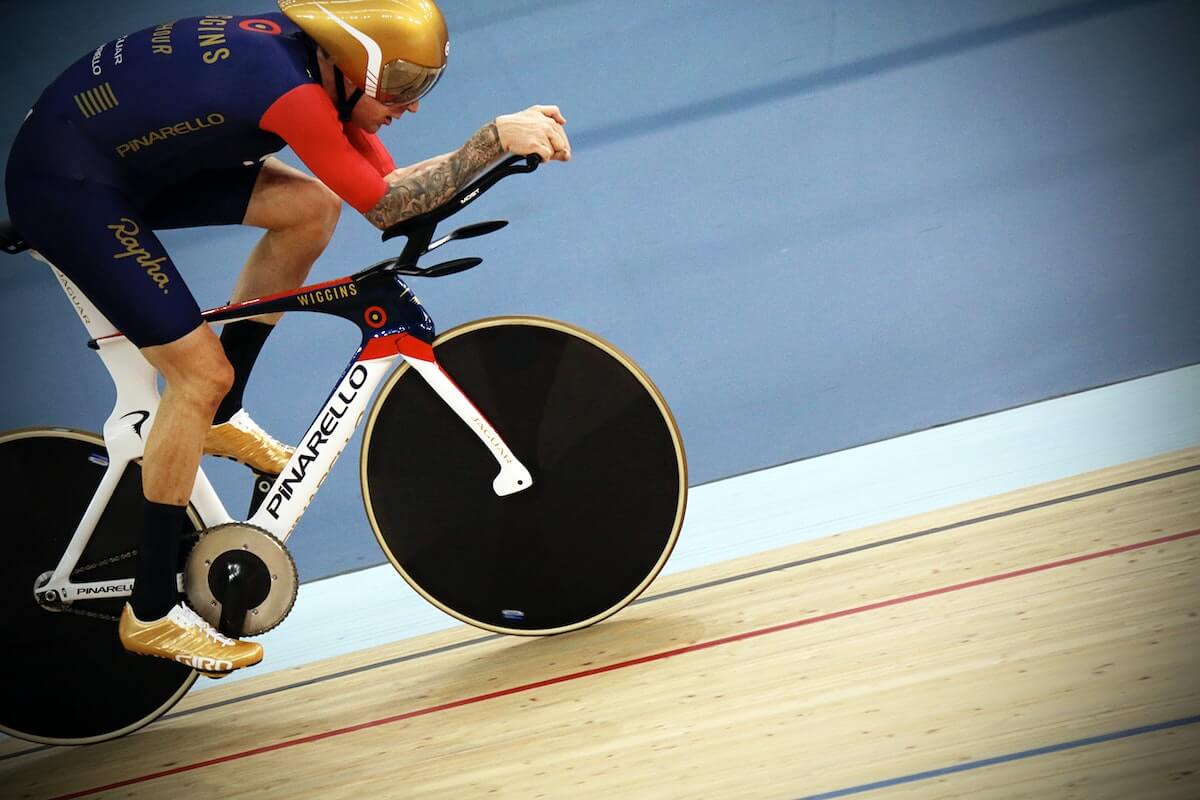
Velodromes have lines too. The black measurement line (shortest path), red sprinter’s line (territory you can defend), and blue stayer’s line (where slower riders must stay). It’s like chess at 35 mph. In sprint races, defending the sprinter’s lane between the black and red lines is critical tactical territory—once you’re in it, competitors can only pass you from above.
But here’s what most people wonder about next: can you actually ride these bikes on regular streets?
Can You Ride a Track Bike on the Street? 🤔
Technically? Yes. Should you? That’s complicated. Honestly.
Track bikes became wildly popular as urban fixies, especially in New York, San Francisco, and Portland.
The aesthetic is undeniable—aggressive geometry, minimal lines, raw mechanical elegance. Bike messengers particularly gravitated to them in the 1990s and 2000s because fewer components meant less to break and fewer things to steal.
But riding brakeless fixed gear in traffic is legitimately dangerous and often illegal. You need to skid to stop quickly, which requires serious skill and destroys tires faster than a Formula 1 pit stop. Learning proper skid stopping technique takes practice and wears through rubber fast.
A single tire might last only a few weeks of regular skid stopping versus months of normal riding.
Most street riders add at least a front brake. This keeps you legal and alive while maintaining that fixed-gear connection. Brakeless riding is illegal in many US jurisdictions, including Chicago and most major cities. Some purists call adding brakes sacrilege. Those purists also have better health insurance than you.

Warning…
Add a front brake minimum for street riding. Brakeless is illegal in many US cities, and fixed-wheel-only braking won’t cut it legally even if you can skid.
Here’s what the law typically requires in most places: bicycles must have brakes capable of making the wheels skid on dry pavement. While technically a fixed gear can do this through leg braking, most jurisdictions interpret this as requiring hand-operated brakes. Philadelphia briefly proposed a $1,000 fine for brakeless riding, showing how seriously some cities take this issue.
The geometry is aggressive too. Track bikes have steep angles and short wheelbases for responsive handling at speed. On streets, this makes them twitchy and less stable than road bikes, especially on rough pavement. That higher bottom bracket designed for pedal clearance on banking also makes the bike feel tall and less stable at slow speeds when navigating urban traffic.
You can ride one on the street. Just know you’re using a Formula 1 car for your grocery run. Effective? Kind of. Practical? Absolutely not. Cool? Undeniably. 🔥
Understanding the geometry helps explain why they handle so differently.
The Geometry and Components That Matter
Track bike geometry differs distinctly from road bikes. Steep head tube angles (74-75 degrees), short chainstays, and bottom brackets positioned higher off the ground. For comparison, road bikes typically have head tube angles around 72-73 degrees and significantly lower bottom brackets.
Why? Pedal clearance on banking. When leaned over at 45 degrees, your inside pedal can’t strike the track. That higher BB prevents catastrophic crashes.
Track riders have reported that even with proper geometry, they occasionally clip pedals on the banking when riding slowly—at racing speeds, the bike’s lean angle naturally keeps pedals clear.
Handlebars are pursuit or track drops—shallow drops with less reach than road bars. This puts you in an aggressive aero position without compromising control. The drops are typically only 10-12cm deep versus 15-17cm on road bikes, allowing riders to get low while still seeing the track ahead.
Wheelsets are often deep-section carbon or disc wheels in the rear. Front wheels might be tri-spoke or deep carbon rims. These aren’t just for looks—they’re aerodynamic advantages that matter when hundredths of a second determine Olympic medals.
At 30+ mph, aerodynamic wheels can save several watts of power, which translates to measurable speed gains over race distances.
Gear ratios get varied based on the event. Sprinters run bigger gears (like 52/14) for pure power. Endurance riders use smaller ratios (like 48/15) for sustainable high cadence. Choosing your gear ratio depends on whether you’re sprinting or running endurance events.
That 52/14 ratio translates to approximately 100 gear inches, which is massive—at 100 RPM cadence, you’re traveling around 30 mph.
The chain stays under constant tension since there’s no derailleur or freewheel. This means bombproof reliability but zero margin for error. Track chains are often thicker and more robust than road chains because they handle extreme forces during standing starts and sprints without any derailleur to absorb shock.
So who actually needs one of these specialized machines?
Who Should Actually Get a Track Bike?
Let’s be real: most people don’t need a track bike. Sorry.
Not racing at a velodrome and considering a track bike for the street? You probably just want a cool-looking fixie. That’s fine. Get a proper fixed-gear road bike with brake mounts and less aggressive geometry. Brands like State Bicycle Co. and Aventon make affordable street-friendly fixed-gear bikes in the $300-600 range that give you the aesthetic without the impracticality.
Track cycling is one of the most exhilarating and physically demanding disciplines. The acceleration is violent. Speeds are terrifying. Tactics are chess-level complex.
Professional track sprinters can generate well over 1,500-2,000 watts of power during standing starts—that’s nearly triple what most recreational cyclists produce.
You’ll need access to a velodrome (about 21 exist in the United States). Most tracks offer beginner classes and rental bikes. Start there. Don’t drop $2,000 on a carbon track bike until you’re certain this is your thing. Beginner programs typically run 3-4 sessions totaling around 6 hours, teaching you basic track etiquette, how to enter and exit safely, and the fundamentals of riding the banking.
For serious racers, good track bikes start around $2,000 and can exceed $10,000 for top-tier equipment. You’re paying for marginal gains—grams shaved, watts saved, fractions of seconds recovered.
Olympic-level bikes? The Look P24 frameset alone runs $14,000. The Factor Hanzo Australia rode in Paris cost $60,000. At that level, frame stiffness, aerodynamics, and weight are obsessively optimized—every single component is chosen to provide the smallest possible advantage.
The Bottom Line
Track bikes represent cycling in its most pure form. No complexity. No compromise. Just mechanical efficiency designed for one specific purpose: going fast in circles on banked tracks.
They’re not practical street bikes. They’re not beginner-friendly. They need dedicated infrastructure and serious commitment. But that’s exactly what makes them special—they’re purpose-built machines that refuse to compromise for anything outside their intended use.
But if you’ve watched track cycling at the Olympics and thought, “That looks absolutely mental”—you’re right. That’s exactly what makes it incredible.
The speeds, the tactics, the physical demands, and the pure connection between rider and machine create something that’s more motorsport than traditional cycling.
Whether you’re considering trying track racing or just curious about those brakeless bikes you see urban riders throwing around, now you know: track bikes are purpose-built machines that demand respect, skill, and a healthy understanding of physics.
Wondering if you should try track cycling? Find your nearest velodrome and book a beginner session. Worst case, you’ve got a hell of a story. Best case? You’ve found your new obsession. 🔥
Frequently asked questions (FAQ)
Riders regularly hit 50+ mph on straights and can exceed 52 mph in banked turns. Sprint events see even higher speeds during the final push. The combination of fixed gear, aerodynamic equipment, and smooth track surfaces allows speeds that would be dangerous on open roads. For context, the flying 200m sprint world record is around 9.1 seconds—that’s an average speed of approximately 49 mph from a rolling start.
No. The fixed gear means pedals connect directly to the rear wheel through the chain. If the bike moves, the pedals move. There’s no freewheel mechanism, so coasting is physically impossible. This takes getting used to but provides incredible control and feedback. First-time fixed-gear riders often forget they can’t coast and get their pedals kicked back unexpectedly—it’s a learning experience everyone goes through.
High-end track bikes use aerospace-grade materials, extensive wind tunnel testing, and marginal gains engineering where grams and watts matter. Olympic-level framesets cost $14,000-$60,000. However, entry-level aluminum track bikes start around $2,000, and most velodromes offer rentals for beginners. The Dolan Pre Cursa, considered a popular entry-level track bike, is commonly found as rental equipment at tracks worldwide.
Yes, most track cyclists do substantial road training for base fitness and endurance. They use regular road bikes with gears and brakes for training rides, saving their track bikes for velodrome sessions and competitions. Track sprinters often do a significant portion of their training volume on the road, using the track mainly for specific sprint work and race simulation.
Final Thoughts
Track bikes aren’t for everyone—and that’s perfectly fine. They’re specialized tools for a specific environment, designed with uncompromising focus on velodrome performance.
If riding fixed gear with no brakes on 45-degree banking sounds terrifying, you’re having the correct reaction.
But if it sounds exhilarating? Find your nearest track and give it a shot. Worst case? You discover track cycling isn’t your thing. Best case? You’ve found a discipline that’s pure speed, strategy, and physics in perfect harmony.