








TL;DR:
- Over-conditioning is worse than under-conditioning – excess oil stretches leather fibers and causes premature sagging that can’t be fixed
- Real schedule: 2-3 times first year, then 1-2 times yearly for Brooks; (Selle Anatomica needs different treatment entirely)
- Break-in takes 200-500 miles of actual riding – no shortcuts work, but it shouldn’t be agony if your saddle’s positioned right
- Tension adjustments: 2-3 times over the saddle’s entire lifespan for Brooks, more frequent for Selle by design
You just dropped $150 on a Brooks B17, and now you’re drowning in conflicting advice about leather saddle maintenance. Some vintage bike forum tells you to oil it weekly, another swears you’ll ruin it with any conditioning, and your buddy insists his saddle’s been fine for ten years without touching it.
Here’s what nobody tells you: Most riders oil their saddles way too often, causing premature sagging, stretched fibers, and early failure.
This guide covers the actual maintenance schedule, how to avoid the mistakes that kill expensive saddle.
A video titled “Brooks Bicycle Saddles – Leather Saddle Product Guide, Proper Setup & Leather Care and Maintenance” from the Urbane Cyclist YouTube channel.
What Actually Kills Leather Saddles
Before we talk about maintenance, let’s talk about destruction. Because understanding what ruins these saddles will save you hundreds of dollars and years of frustration.
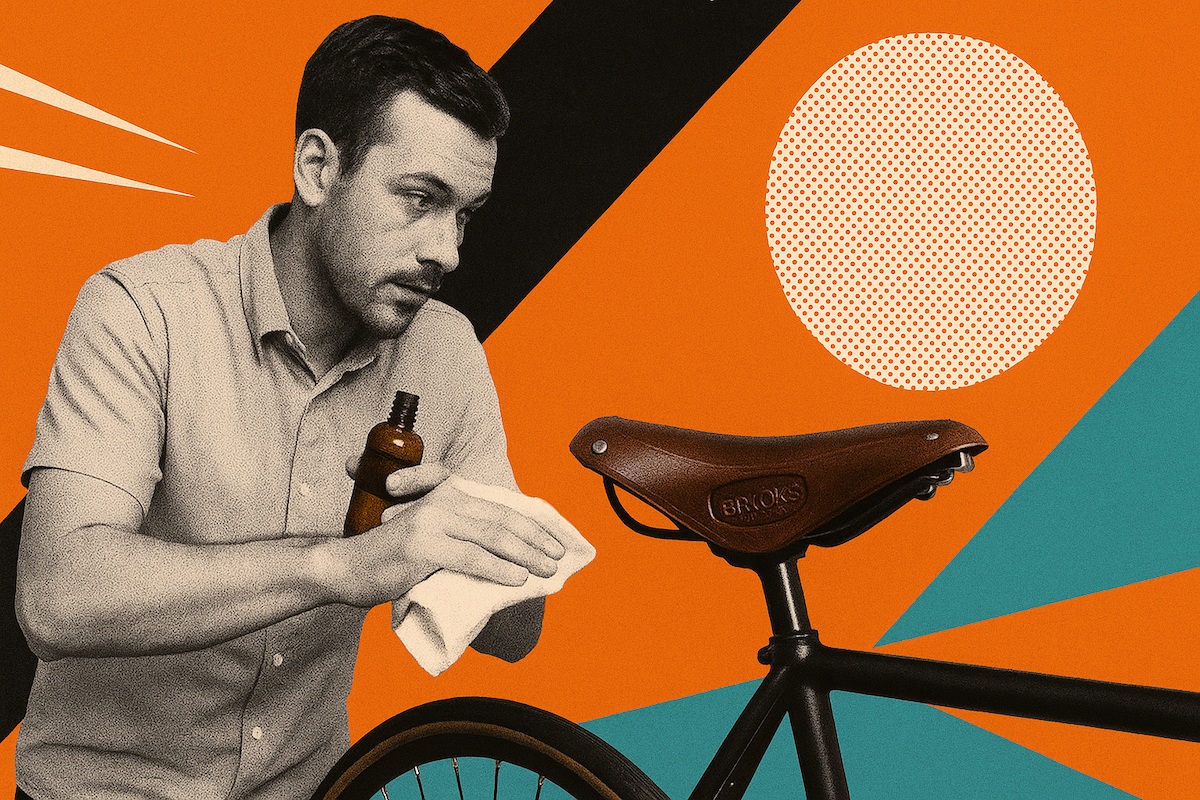
Most riders are accidentally killing their Brooks or Selle with good intentions. Think of it like watering a plant – too little is bad, but drowning it kills faster.
The biggest killer? Over-conditioning. And I’m not talking about some theoretical problem – Brooks’ official care page explicitly states
“please do not over treat your saddle as this may damage it.”
Selle Anatomica goes harder, warning riders to never use softening products like Proofide on their saddles because it undermines the entire design.
Excess oil breaks down leather fiber structure, accelerates stretching, and attracts dirt that acts like sandpaper on the surface.
Leather is basically animal skin with interlocking protein fibers – when you over-saturate those fibers with oil, they lose their ability to maintain tension and support your weight.
Forum users report a death spiral – over-condition the saddle, it sags, so you tension it, which stretches the fibers more, so you condition it again because it “looks dry,” creating more sag, more tensioning, until the rails rip out or the leather fails completely. 💀
One BikeForums user put it perfectly: “Its possible to use proofide too often and cause the leather to soften. You then need to keep tightening the bolt causing premature failure.” Another rider on CycleChat reported their 7-year-old Brooks treated 3-4 times per year “has needed occasional adjusting to take up some sagging,” while users treating once or twice yearly report minimal tension needs over similar timeframes. The pattern is clear across multiple forums and decades of collective experience.
Things that actually kill leather saddles
- Over-conditioning (most common and most damaging)
- Prolonged wetness without proper drying (sitting wet for days, not occasional rain)
- Over-tensioning (rips rails out, creates pressure points, voids warranty)
- Direct UV exposure (stored in bright sunlight long-term)
What won’t hurt your saddle?
- Occasional rain rides.
- Skipping conditioning for 8-12 months. Sitting unused for weeks.
- Being ridden hard.
- Your saddle is tougher than the internet makes you think.

Interesting fact
Brooks has been making leather saddles in Birmingham, England since 1866 using essentially the same vegetable-tanned leather process. If these saddles were as fragile as forum panic would suggest, the company wouldn’t have survived 150+ years of manufacturing.
Now that you know what destroys saddles, let’s talk about what actually preserves them. The real maintenance schedule might surprise you – it’s way less involved than you think.
The Actual Conditioning Schedule
Here’s where the confusion starts. Brooks says “every 6 months” in some places and “3-6 months” in others. Vintage forums tell you monthly. Your friend who’s been riding the same saddle since 1987 says he’s conditioned it maybe twice. Who’s right?
Brooks Official Schedule (from their product care page): Apply Proofide every 6 months for regular riders. Use it “several times during the breaking-in period” then “periodically (3-6 months) thereafter.” A 25ml tin costs around $15-20 and should last you years.
For context, “regular riders” in Brooks terminology typically means riding at least a few times per week – if you’re a weekend warrior or occasional rider, you can stretch that 6-month interval even longer.
Selle Anatomica’s Different Philosophy: They explicitly warn against conditioning products. Their saddles use “watershed” leather on top (already water-resistant from tanning) and need their Saddle Sauce acrylic waterproofing on the underside and raw edges only. The warning is clear: “Do not use Proofide as it softens the leather.” They want firm, properly-tensioned leather, not soft supple leather.
This makes sense when you understand their saddle design relies on controlled tension and a slot down the center for pressure relief – softening undermines that entire system.

Anecdotes from the forms:
One forum user with a 10-year-old B17 has “done maybe 3 times” total with no issues. Another reports riding an 8-year saddle that’s been treated twice. The consensus among experienced riders? Once or twice per year is plenty for most people who aren’t riding in extreme conditions.
Reddit’s r/bikecommuting and r/FixedGearBicycle consistently echo this – the veterans who’ve been riding Brooks for decades condition far less frequently than new owners think they should.
Think of it like the Goldilocks principle – too little and the leather dries out and cracks (rare, takes years of complete neglect). Too much and you soften the structural integrity (common, happens in months). Just right means conditioning when the leather genuinely feels dry and stiff to the touch, not just because it’s been a few months.
Your saddle will actually tell you when it needs conditioning through how it looks and feels.
To test: press firmly on the leather with your thumb. Fresh, properly maintained leather has a slight give and spring-back. Dried-out leather feels rigid and doesn’t compress much. If you’re not sure, wait another month – you can’t hurt it by waiting.
| Product | Best For | Frequency | Effect | Price |
|---|---|---|---|---|
| Brooks Proofide | Brooks saddles | 6-12 months | Moderate softening | $15-20 |
| Obenauf’s LP | Heavy weather protection | 6-12 months | High softening (use sparingly) | $10-15 |
| Selle Anatomica Saddle Sauce | Selle saddles only | As needed | No softening (acrylic barrier) | $20-25 |
With the when sorted out, let’s talk about the how – because even with the right frequency, bad technique can cause problems.
How to Apply Conditioner Without Fucking It Up
Application technique matters almost as much as frequency. Like cooking, you can have the right ingredients and still screw it up. Here’s how to avoid that.
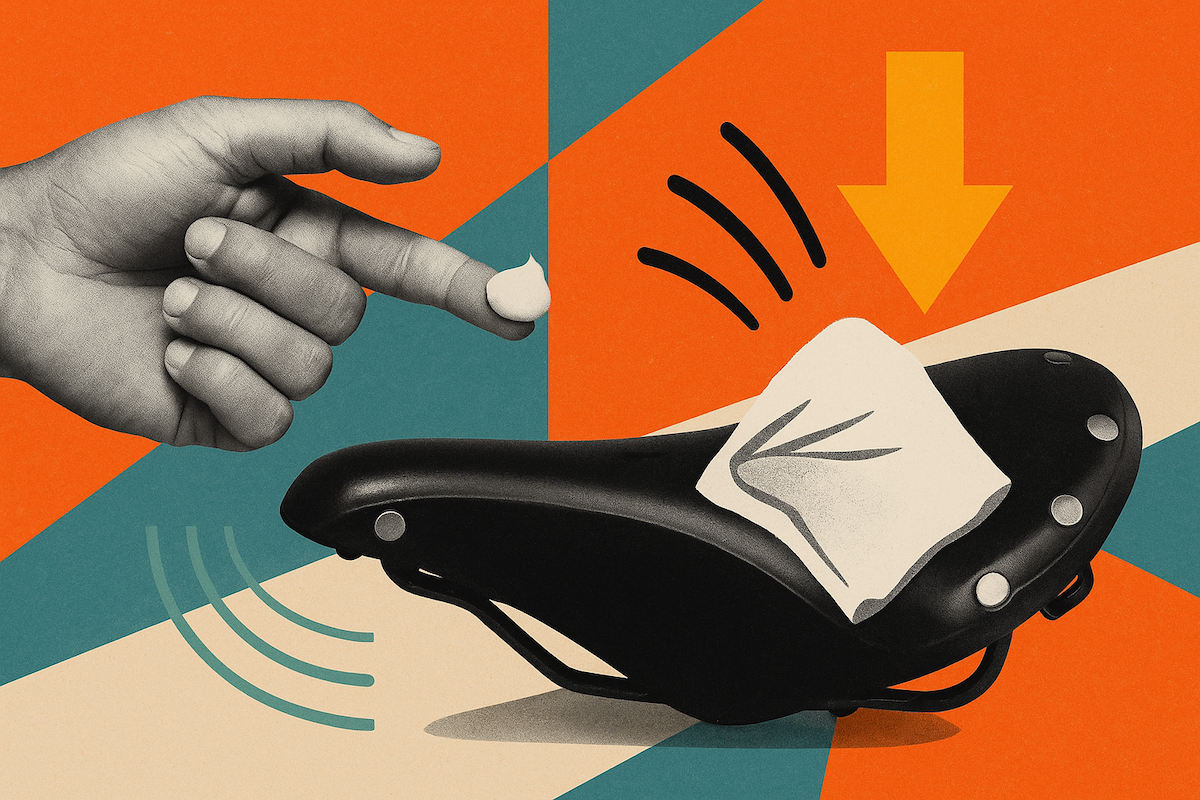
Take a small dab – we’re talking pea-sized, maybe dime-sized max – and spread it thin with your fingers or a clean cloth. Body heat from your fingers actually helps melt the product slightly, making it easier to spread evenly.
Use an extremely light coat.
Start with the underside. Work the product into all the surfaces you can reach, getting into the tight spaces under the rails and around the nose. The leather won’t absorb much initially, especially if it’s a new saddle – that’s normal.
For the top side, if you’re conditioning it at all (remember, Brooks pre-aged saddles and all Selle Anatomica tops should not be conditioned).
- If your cloth comes away with a lot of product on it, you used too much.
- If product is dripping off or pooling anywhere, you’ve overdone it. Wipe off the excess immediately.
Let it sit 24 hours before riding so it fully penetrates. Why 24 hours? The oils need time to work their way deep into the leather fibers – riding too soon means you’ll just wipe off product that hasn’t absorbed yet, wasting it and leaving the surface inadequately protected. Then buff the top side with a clean cloth to remove any residue.
Dos and don’ts
Do
- Apply thin, even layers
- Focus most product on underside
- Let absorb fully before riding (24 hours)
- Condition only when leather genuinely feels dry
Don’t
- Soak or drench the saddle
- Apply right before long storage periods (attracts mold)
- Condition monthly “just because” or on a schedule
- Touch Selle Anatomica tops or Brooks pre-aged tops
With your conditioning approach sorted, let’s tackle the other major concern: that painful break-in period everyone talks about. This is where a lot of misinformation lives.
Break-In Reality: 200-500 Miles (No Shortcuts)
New leather saddles are hard. Like sitting on a wooden plank hard. This is normal, expected, and necessary for the saddle to eventually mold to your anatomy. But there’s a difference between normal break-in discomfort and actual problems. Think discomfort vs pain
discomfort is temporary and decreases with time, pain is sharp and often indicates something’s wrong with your setup.
Brooks official FAQ explains that “breaking in” is simply the process where rigid leather fibers become supple through repeated riding and natural movement. Forum users report widely varying timelines: some feel improvement around 160 miles, others describe their saddle “suddenly breaking in” around 250 miles, while some outliers need 500 miles.
The variation comes down to rider weight (heavier riders compress leather faster), riding style (more aggressive riding accelerates break-in), and honestly just leather batch differences – no two hides are identical.
What’s normal during break-in:
- Initial stiffness and firmness (obviously)
- Gradual molding to your sit bones over 200-500 miles
- Minor discomfort that decreases with each ride
- Visible sit bone impressions starting to form
What’s NOT normal and indicates a problem:
- Sharp pain or numbness (this is positioning, not break-in)
- Saddle still completely rigid after 300+ miles (wrong saddle for your anatomy)
- Pain that gets worse over time instead of better
No shortcuts work. Not hot water soaks (damages leather structure). Not baseball bat molding (creates wrong pressure points). Not excessive conditioning to “speed it up” (causes that over-softening problem we discussed). The only legitimate method is riding it – preferably short, frequent rides rather than long painful slogs.
The only legitimate method for breaking in a leather saddle is riding it – preferably short, frequent rides rather than long painful slogs.
Check your saddle height, tilt, and fore-aft position before you assume break-in is the problem. Most “break-in pain” is actually setup issues that no amount of riding will fix. Getting proper bike fit and saddle positioning right makes an enormous difference – if you’re experiencing persistent discomfort, it’s worth checking whether choosing the right saddle for your anatomy is actually the issue rather than break-in.

Break-in Tip
Start with 30-minute rides and add 15 minutes each week. If you’re still uncomfortable after 300 miles of proper positioning, it’s probably the wrong saddle for your sit bone width or riding style, not a break-in issue.
Speaking of setup, let’s talk about tension adjustments.
Tensioning: Way Less Than You Think
If you’re new to leather saddles, you might think tensioning is something you do regularly. Wrong. For Brooks saddles, you’ll typically tension your saddle maybe 2-3 times over its entire 10-20 year lifespan. Seriously. Compare that to replacing a modern foam saddle every 2-3 years, and you start to understand why people love leather.
Tension only when the saddle sags enough to cause discomfort – which for Brooks typically happens after 6-12 months minimum of regular riding. One ElectricBikeForum user reported their first tension adjustment at 900 miles after the saddle was “beginning to sag just a touch.” That’s typical. Some riders go years between adjustments if they maintain proper conditioning habits.
The quarter-turn rule is critical: adjust by 1/4 turn maximum, then ride 100+ miles before even considering another adjustment. The leather needs time to respond and settle. Selle Anatomica saddles are different by design – they’re meant to be tensioned more frequently, with the goal of keeping the slot at the rear 6mm wide at its narrowest point.

Over-Tensioning Trap
Over-tensioning does real damage. It rips rails out of the leather. Creates uncomfortable pressure points. Accelerates wear. Brooks will actually void your warranty for over-tensioning damage. Their official FAQ explicitly states they refuse warranty claims where tension adjustment was overlooked or where leather was over-tightened.
A saddle that’s completely straight when viewed from the side is over-tensioned. The leather should have some natural curve, like a gentle hammock. If yours is flat as a board, back off the tension.
Selle Anatomica’s philosophy differs – they expect and design for more frequent micro-adjustments as their thinner leather stretches during the molding process. Check yours every few months and adjust as needed to maintain that 6mm slot width. This isn’t a flaw – it’s intentional. Their saddles use thinner, more supple leather from the start, trading immediate comfort for more maintenance over time.
Rain Won’t Instantly Ruin Your Saddle
Take a breath. Your $150 saddle can handle occasional rain better than you think.
Brooks official guidance says “a Brooks saddle should not be ridden long during very heavy showers” but also clearly states:
“if it does get wet, as long as you let it naturally air dry it will be fine.”
The key word is “naturally.” Wipe off excess water with a cloth, then let it air dry at room temperature.
Never use heat – no hair dryers, no radiators, no direct sunlight, no parking it next to a heater. Heat causes uneven drying and can damage the leather structure. And whatever you do, don’t tension it while wet or immediately after – wet leather is more susceptible to stretching. Wait until it’s completely dry (give it 24-48 hours depending on humidity) before making any tension adjustments.
Fun Fact
British postal workers rode Brooks saddles daily for over a century, in all weather conditions, with minimal special care. The saddles held up remarkably well to constant use and exposure, proving their durability in real-world conditions far harsher than most recreational riding.
For year-round commuters riding in regular rain, you’ll want a more aggressive conditioning schedule (every 6-8 weeks) and a waterproof cover is worth the investment.
If you’re storing your bike for the off-season (more than a month), back off the tension bolt slightly to relieve stress on the leather – just remember to re-tension before riding again. A $10-15 budget saddle cover works fine for occasional rain. Keep a plastic grocery bag or shower cap in your bag for emergencies. But don’t fall into the trap of over-conditioning thinking you’re “waterproofing” it.
Quick Troubleshooting
First, check if you’ve over-conditioned it. Does it feel greasy? Look darker than when new? If yes, stop conditioning it and just ride it. If it’s genuinely stretched from use, tension by 1/4 turn and ride 100 miles. If still saggy after proper tensioning, it might be reaching end of life.
Here’s the truth nobody tells you – most saddle squeaks aren’t the leather at all. They’re the seatpost and rail interface. Grease where the rails meet the seatpost clamp and make sure all bolts are properly tight. You can use a tiny dab of lithium grease or even a drop of chain oil on the contact points. Like that scene in A Quiet Place where every tiny sound matters, saddle squeaks will drive you insane, but they’re usually an easy fix that takes two minutes with the right lubricant.
Finally, an actual case for conditioning. Clean gently with a damp cloth, apply a thin coat of appropriate conditioner, and you may need 2-3 treatments if it’s severely dried. This typically only happens with years of complete neglect or extended storage in harsh conditions.
Usually normal patina, which is actually a good sign of a well-used saddle developing character. If it’s mold (smells musty), wipe with a damp cloth, let dry completely, then condition.
That covers the main issues you’ll actually encounter. Notice how none of them are catastrophic? Now let’s talk about what you need to buy to maintain your saddle properly – it’s minimal.
What You Actually Need to Buy
The beauty of leather saddle maintenance? You need almost nothing. Here’s the essential purchase list that’ll run you $25-40 total:
Brooks riders: Brooks Proofide 25ml tin (around $15-20). Available on Amazon or any bike shop. That’s it. One tin lasts years with proper use – we’re talking about a product you might buy twice in a decade of riding!
Selle Anatomica riders: Saddle Sauce (around $20-25) from the Selle Anatomica website. Nothing else. Their acrylic formula works differently than oil-based conditioners, creating a moisture barrier rather than penetrating the leather.
Everyone needs: A basic saddle cover ($10-15). Any waterproof cover works – don’t overthink this. A shower cap from a hotel works in a pinch.
Optional upgrade (~$50-70 total): Step up to a higher-quality weather cover ($30-40) if you’re commuting daily. And maybe a soft cloth for application.
Frequently Asked Questions (FAQ)
Brooks recommends every 6-12 months for regular riders. Selle Anatomica only needs waterproofing as needed with their Saddle Sauce. Most experienced forum users condition 1-2 times per year maximum and report excellent results over decades. When in doubt, wait longer – over-conditioning causes far more damage than under-conditioning. Your saddle won’t suddenly die if you skip a month or three.
Occasional rain is totally fine. Just wipe it dry afterward and let it air dry naturally at room temperature. Brooks official guidance only warns against riding “long during very heavy showers.” Cover your saddle if parking outside in rain, but don’t panic about getting caught in a drizzle. Think of it like leather shoes – they can get wet, they just can’t stay wet for days.
No. Discomfort during break-in is completely normal for 200-500 miles. Extra conditioning won’t speed up the process and actually causes premature sagging. Check your saddle position first – most “break-in pain” is actually bad bike fit (wrong height, tilt, or fore-aft position). If positioned correctly and you’re still in pain after 300+ miles, the saddle might not match your anatomy. In that case, it’s worth exploring other saddle options better suited to your riding style.
For Brooks: rarely. Only when it sags enough that you feel it affecting comfort, usually 6-12 months minimum. For Selle Anatomica: check every few months and adjust to maintain a 6mm slot width at the narrowest point. Both brands: only adjust 1/4 turn at a time, then ride 100 miles before considering another adjustment. If you’re tensioning frequently, you’re likely over-conditioning the saddle.
Final Thoughts
Leather saddles reward smart neglect over obsessive care. The goal isn’t maintaining museum-quality perfection – it’s getting 10-20 years of comfortable riding through minimal, conservative maintenance. When in doubt, do less rather than more. Trust what you observe on your actual saddle over what some forum thread from 2008 recommends.
Check your saddle’s current condition right now. Does it look and feel fine? Then don’t touch it. Genuinely dry and parched? Apply a thin layer of appropriate conditioner. Then forget about it for 6-12 months and just ride. Your saddle will mold to you, develop character and patina, and become more comfortable with time and miles – not with products and procedures.
Ultimately thought, saddle comfort is highly individual and depends on anatomy, riding position, and sit bone width. Proper maintenance extends saddle lifespan but cannot fix fundamental incompatibility between your body and a particular saddle model. When in doubt, consult with a professional bike fitter.