








TL;DR:
- Super glue becomes brittle and inflexible when dry, causing it to crack and fail under the constant flexing of inflated tires
- Vulcanizing rubber cement creates a chemical bond at the molecular level—it’s not glue, it’s actually welding rubber together
- Road bike tires hold 80-130 PSI—far more pressure than car tires (32-35 PSI), making super glue repairs catastrophically prone to failure
- The one exception: Super glue can temporarily seal small cuts in the tire casing itself (not the tube), buying you enough time to limp home
Got a flat tire and eyeing that bottle of super glue in your toolbox? 🤔 Hold up. Before you try playing MacGyver with cyanoacrylate and rubber, you need to know something: super glue fails on bike tubes in the vast majority of cases—and even when it seems to “work” initially, you’re walking home within a few blocks anyway.
There is one specific scenario where super glue might actually save your ride. It’s not what you think, and it’s definitely not fixing your inner tube. ⚡
I’m breaking down exactly when super glue turns your puncture into a bigger problem, what actually works for tire repair, and the emergency situations where—just maybe—it could get you out of a jam. If you’re dealing with frequent flats, check out our guide on preventing tire punctures to avoid this mess altogether.
A video titled “How to Patch a Bike Tube Like a PRO! (Avoid These Mistakes)” from the Path Less Pedaled YouTube channel.
What is superglue?
Cyanoacrylate adhesive, also known as superglue, is an immediate, high-strength, fast-bonding adhesive designed to connect virtually any substance. Super glues are prized for their durability to temperature and moisture and are often used with stone, metal, wood, plastic, glass, ceramic, paper, and the majority of other common materials.
Why Super Glue Fails on Bike Tubes
Super glue dries rock-hard and completely inflexible. Your bike tube? It’s constantly flexing, stretching, and moving as you ride. Every. Single. Rotation.

Warning: Super Glue Can Create a Puncture Risk
Some experienced mechanics have found that hardened super glue can actually work its way through the rubber and puncture the tube from the inside—turning your attempted fix into a new problem. The rigid glue essentially becomes a sharp object embedded in your tire.
Think about what happens when you inflate a tube to 100 PSI. That rubber stretches. When you hit a bump, it compresses and bounces. When you corner, it deforms under load. Super glue can’t handle any of that—it just snaps like a dried-out rubber band.
The rigid bond created by cyanoacrylate will flake off once the tire starts flexing. Even if it holds initially, you’re looking at failure within a few blocks of riding. I’ve seen riders try this and end up walking their bike home the same day.
The Pressure Reality Check
Let’s talk numbers. Road bikes run between 80-130 PSI. That’s significantly more pressure than your car tires, which usually sit at 32-35 PSI. You’re asking a brittle adhesive to hold against forces that would blow out a car tire instantly.
Think about it: your average fixie running at 100 PSI is dealing with more than triple the pressure of automobile tires. And unlike car tires, bike tubes are thin, flexible rubber constantly deforming with every pedal stroke, every bump, every corner. For more on proper tire pressure and maintenance, understanding your tire type makes a huge difference.
When super glue dries on rubber, it creates a potential puncturing object. The hardened glue can become sharp enough to pierce the tube from the inside—defeating the entire purpose of your “repair.” It’s like putting a tiny knife inside your tire. Not exactly ideal.
Temperature and Moisture Issues
Temperature changes during riding weaken super glue bonds even further. Heat from friction, cold morning air, moisture from rain—all of these speed up the failure of cyanoacrylate on rubber. Water works its way between the glue and tube, breaking down adhesion faster than you can say “flat tire.”
The compound was never designed for flexible rubber applications. It was made for hard, rigid materials like plastic, wood, and metal. Using it on bike tubes is like trying to use wood glue on fabric—wrong tool, wrong job.
What Actually Works: Proper Tire Repair Methods
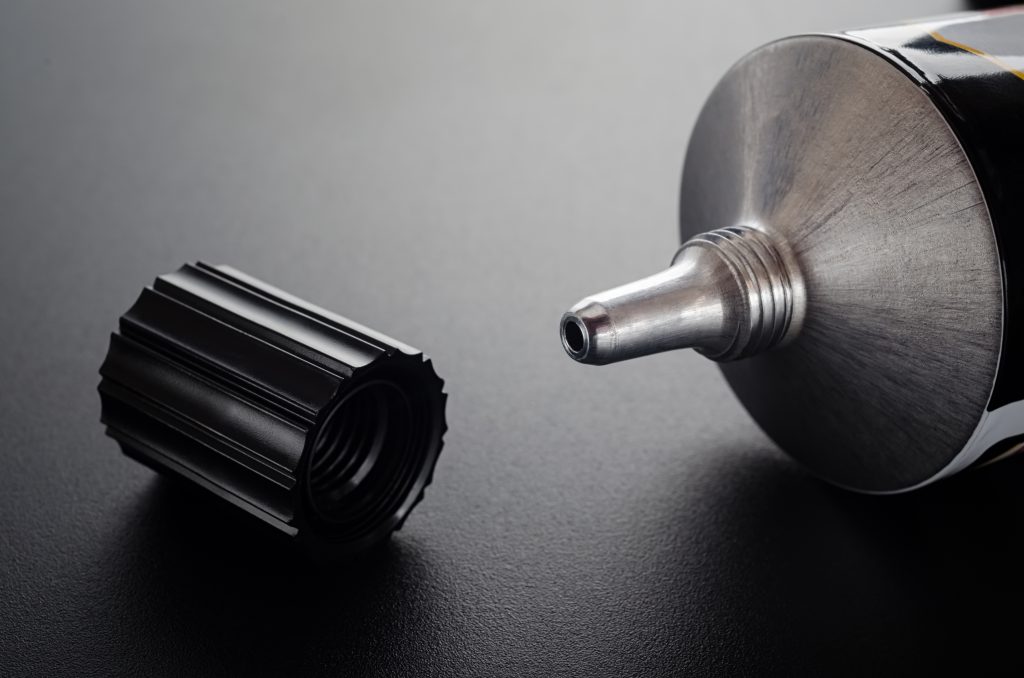
What professional mechanics actually use: vulcanizing cement. And the mind-blowing part—it’s not really “glue” at all.
Vulcanizing cement is a solvent that temporarily melts both the patch and tube rubber. When you apply it and wait those critical 10 minutes, it’s not “drying”—it’s evaporating and softening the rubber at a molecular level.
When you press the patch on, the molecules from the patch and tube intermingle and bond. As the solvent fully evaporates, you’re left with what’s essentially a weld, not a glued joint. The patch and tube become one continuous piece of rubber.

Did you know? It’s Not Glue—It’s Chemistry
The “cement” in patch kits contains solvents like toluene, heptane, or benzene that literally dissolve a thin layer of rubber on both surfaces. When pressed together, these dissolved layers merge at the molecular level through a process called vulcanization—the same chemical reaction that makes raw rubber durable in the first place. This creates a bond stronger than the rubber itself.
That’s why proper patches can last for thousands of miles when applied correctly. They’re not stuck on—they’re fused on. If you’re serious about proper bike maintenance, knowing how to maintain your fixie goes hand-in-hand with mastering repair techniques.
Best Patch Kits for the Money
| Product | Price | What You Get | Why It Works | Best For |
|---|---|---|---|---|
| Park Tool VP-1 | ~$6-7 | 6 patches, vulcanizing fluid, sandpaper | Industry standard, 17g weight, fits any saddle bag | Road and commuter cyclists |
| Rema Tip Top TT02 | ~$4-5 | 5 patches + cement | What bike shops use professionally, nearly century-old trusted brand | Budget-conscious riders who want quality |
| Slime 1022-A | ~$5-6 | 5 patches, scuffer, glue | Budget-friendly, works for bikes and inflatables | Casual riders, multiple bikes |
A proper patch kit costs less than $5 and will create a permanent repair when applied correctly. There’s literally no reason to gamble with super glue. These kits are small enough to carry on every ride—throw one in your saddle bag and you’ll never find yourself stranded.
But wait—what if the patch kit cement dries out? This is a common issue. Those little tubes of vulcanizing fluid tend to dry up between uses. Store them in a sealed plastic bag with minimal air, or buy a small can of automotive vulcanizing cement (available at auto parts stores) that lasts longer. The automotive stuff is chemically identical but comes in larger, more durable containers.
Pro Tip: Keep Your Patch Kit Fresh
Store patch kits in a cool, dry place—not in your saddle bag year-round. Heat and humidity speed up cement drying. Before every ride season, check if your cement is still liquid by squeezing the tube. If it’s dried out, replace it—cement tubes cost $1-2. Many riders keep a fresh tube at home and only put it in their saddle bag for rides, rotating it back to storage afterward.
How Rubber Cement Differs from Super Glue
Regular rubber cement from a stationery store isn’t the same as vulcanizing cement, but it’s still way better than super glue for emergency repairs. Rubber cement stays somewhat flexible, which means it won’t crack and fail like cyanoacrylate.
The main issue with regular rubber cement? It won’t create that molecular bond. It’s an adhesive, not a welder. The patch might hold temporarily, but it’s not a permanent fix. For a truly bombproof repair, vulcanizing cement is non-negotiable.
Super Glue: Why It Fails
- Dries brittle and inflexible
- Cracks under constant tube flexing
- Can puncture tube from inside
- Fails in hours to days max
- Temperature sensitive
- Creates rigid, non-stretching bond
Vulcanizing Cement: Why It Works
- Creates molecular bond (welding)
- Remains flexible with rubber
- Lasts thousands of miles
- Temperature resistant
- Professional standard for decades
- $4-7 investment with 5-8 repairs
That said, if you’re stuck roadside with no vulcanizing cement but you’ve got regular rubber cement, go for it. Apply it to both the patch and tube, let it get tacky (5-10 minutes), then press firmly. It’ll get you home and probably last a few rides.
The One Exception: Tire Casing Repairs
The plot twist: super glue can work for sealing small cuts in the tire casing itself—not the inner tube. This is especially relevant for tubeless setups or when you have a cut in the outer tire that might allow the tube to bulge through.
The technique some experienced riders use:
- Inflate the tire to maximum pressure listed on the sidewall
- Drip a small amount of thin super glue (not gel) directly into the cut
- Deflate the tire while the glue cures, pulling the cut edges together
- Let it cure overnight at room temperature—don’t rush this step
- For extra security, apply a tire boot on the inside before reinstalling
This method has been used successfully by some cyclists for small sidewall cuts or tread slices—but it’s a temporary fix to get you home or extend the life of an expensive tire. You’re still going to want to replace that tire eventually, especially for high-performance riding.
Why does this work on tires but not tubes? The tire casing is much thicker and less flexible than the tube. A small spot of rigid glue on a thick, relatively stable tire casing won’t flex enough to crack. But on a thin tube that stretches and compresses constantly? That same rigid spot becomes a failure point immediately.
Important Caveats
Don’t mistake this for a tube repair. The tire casing is thicker, less flexible in that specific spot, and under different mechanical stresses than the tube. What works on the casing will absolutely fail on the tube.
Also, this only works for very small cuts—we’re talking pinhole to maybe 1/4 inch (6mm) maximum. Anything larger needs a proper tire boot or replacement. And if you’re running high-pressure road tires (100+ PSI), even this technique becomes risky because the pressure can force open cuts that seemed sealed.
Some riders pair this with a tire boot on the inside for extra security. A tire boot is just a piece of strong material—even a dollar bill works in a pinch—placed between the tire and tube to prevent bulging. Professional tire boots are just reinforced fabric patches, but in emergencies, cyclists have successfully used dollar bills, energy bar wrappers, or even duct tape folded several times.
One more thing: If you use super glue on a tire casing, mark that spot somehow. Write on it with a marker, put a piece of colored tape nearby—something to remind you that this tire has a repair and needs eventual replacement. Don’t let yourself forget and ride this tire for years, especially in demanding conditions.
Emergency Roadside Alternatives
Look, sometimes you’re miles from anywhere with no patch kit, no spare tube, and no phone signal. If super glue is literally your only option for a tube puncture, here’s the least-terrible way to attempt it:
This is a last-resort desperation move. Don’t plan on this working—plan on carrying proper repair supplies. But if it’s this or a 10-mile walk, it’s worth a shot.
Emergency super glue technique (for tubes):
- Use thin super glue, never gel formula—gel doesn’t penetrate punctures
- Mark the puncture location precisely with a marker
- Clean the area around the hole thoroughly—dirt kills any bond
- Apply the smallest possible drop directly over the hole
- Stretch the tube slightly to pull glue into the puncture (this is the key step)
- Let it cure completely (5+ minutes minimum, preferably 10)
- Inflate slowly and test before putting weight on it
- Keep pressure LOW—aim for 60% of normal inflation at most
Will this work? Maybe for a few miles at very low pressure. You’re gambling. But if your alternative is a 10-mile walk home in the dark, it’s worth a shot. Once you get home, immediately replace or properly patch that tube—don’t trust this repair for even one more ride.
Better Emergency Options
If you have literally anything else available, use that instead:
Can actually seal a puncture temporarily, especially if you wrap multiple layers around the tube. It’s not pretty, but it works better than super glue for getting home. The adhesive stays somewhat flexible and the tape provides structural support.
Products like Fix-A-Flat for bikes or Muc-Off BAM inject latex foam that seals punctures and inflates simultaneously. These are specifically formulated for bike tires and actually work quite well for small punctures. Keep a can in your saddle bag for emergencies.
For cuts in the tire casing (not tube punctures), folding up a dollar bill and placing it between the tire and tube works surprisingly well as a temporary boot. The texture prevents slipping and the paper is surprisingly strong under pressure.
What About Other Adhesives?
Don’t even think about it. Gorilla Glue expands as it cures, requiring moisture to work. Inside your tube, this means it’ll foam up and create lumps that make your ride feel like you’re on square wheels. It’s messier, harder to work with, and even more rigid than super glue once cured.
The expanding foam will create uneven spots that speed up wear on other parts of your tire and tube. Just no. Hard pass.
Contact Cement (Weldwood)
Now we’re talking. Contact cement like Weldwood actually works pretty well for tire repairs—it’s flexible when cured and creates a strong bond. Apply to both surfaces, let it get tacky (15+ minutes), then press together firmly.
The downside? You need to apply it to both the patch and the tube for it to work properly. It’s basically a DIY version of using a real patch kit, so if you’re going to this much trouble, just buy proper vulcanizing cement.
E6000 Adhesive
E6000 is an industrial-strength adhesive that remains flexible after curing and is waterproof. Some cyclists swear by it for tire repairs, especially for sidewall tears that need extra holding power.
It takes 24-48 hours to reach full strength, making it impractical for roadside repairs. But for home repairs where you have time to let it cure properly? It can work. Just remember it’s not creating that molecular bond like vulcanizing cement does.
Prevention: Stop Getting Flats in the First Place
Here’s a fact: firmer, higher-pressure tires puncture less often. A tire at 80 PSI has half as much rubber in contact with the road as one at 40 PSI, meaning less surface area to pick up glass and debris.
Higher pressure also prevents snakebite punctures (pinch flats), where hitting a bump flattens the tube against the rim so hard it gets pinched between the rim and road, creating two small holes that look like snake fangs. These are responsible for a huge percentage of flats, especially for riders who run low pressure.
Check your tire sidewall for the recommended pressure range and stay near the upper end. Most road tires recommend 80-130 PSI, while wider commuter tires might be 40-80 PSI. Don’t exceed the maximum—that’s genuinely dangerous—but don’t ride on soft, squishy tires either.
Pro tip: Tires lose air over time like party balloons. Check pressure weekly with a reliable floor pump that has a gauge—don’t wait until they feel soft. By the time a tire feels soft, it’s lost 20-30% of its pressure and is in the danger zone for pinch flats. Get yourself a quality floor pump for home use and check before every ride.
Quality Tires Are Worth It
Cheap tires with thin casing wear out fast and puncture easily. Investing in quality tires with puncture protection layers saves you money long-term through fewer flats and longer tread life.
Look for tires with:
- Puncture-resistant belts or strips (Kevlar, aramid fiber, or thick rubber layers)
- Thicker casing measured in TPI (threads per inch)—lower TPI = thicker, tougher
- Good reviews for urban/commuter durability from actual riders
- Reflective sidewalls as a bonus safety feature for night riding
Yes, they cost more upfront. But would you rather pay $40-50 for quality tires that typically last 2,000-3,000 miles or $20 for cheap tires that flat every other week and wear out in 500 miles? Do the math—over a year, quality tires are often actually cheaper.
Real-world example: A set of Continental GatorSkins (popular puncture-resistant tire) costs about $45 each but can easily last 3,000+ miles with minimal flats. Budget tires at $15 might need replacement every 800 miles and cause 5-10 flats in that time. Between new tubes, your time, and replacements, the cheap tires cost way more.
Tire Sealant for Tubeless or Tubes
Modern tire sealants like Stan’s NoTubes or Orange Seal can be used inside regular tubes or with tubeless setups. When you get a puncture, the escaping air forces sealant into the hole where it hardens into a plug—often fixing the flat automatically before you even notice.
It only works on small holes (typically up to 1/4 inch), not slits or gashes. And you’ll lose a little pressure each time it seals—maybe 5-10 PSI—so check and top off as needed. But for preventing annoying flats from thorns and small debris? Total lifesaver.
Important note: Some tire manufacturers (like Kenda) warn against using sealant in their cotton-lined tubes because the moisture can cause the cotton to deteriorate. Check your tube and tire manufacturer recommendations before adding sealant.
Also, sealant can complicate future repairs—many bike shops won’t patch tubes with sealant in them, so you might need a full tube replacement if the sealant doesn’t seal a particular puncture.
For tubeless setups specifically, you’ll need to refresh the sealant every 3-6 months as it dries out. Keep a small bottle on hand and add 2-4 ounces per tire when you notice it’s getting sluggish to seal.
Frequently Asked Questions (FAQ)
No. Super glue dries brittle and inflexible, causing it to crack and fail under the constant flexing of bike tires. While some riders report temporary success with very small holes, most repairs fail within days or even hours of riding. Proper vulcanizing cement creates a molecular bond that can last thousands of miles, making it the only reliable option for permanent repairs. The key difference: super glue sits on top of the rubber, while vulcanizing cement actually fuses the rubber together at a chemical level. One is a brittle coating that cracks, the other is a true weld.
Rubber cement remains flexible after drying and is chemically compatible with rubber, while super glue becomes rigid and brittle. Vulcanizing cement (used in patch kits) isn’t really glue at all—it’s a solvent that melts the rubber to create a molecular bond. Regular stationery rubber cement works better than super glue in emergencies but isn’t as reliable as proper vulcanizing cement. Think of it this way: super glue is like using tape, rubber cement is like using better tape, and vulcanizing cement is like welding two pieces of metal together.
Super glue is not recommended for tubeless systems as a sealant replacement. Tubeless setups use liquid sealants specifically formulated to remain liquid and seal punctures automatically like Stan’s NoTubes or Orange Seal. These sealants stay liquid inside the tire and can seal multiple punctures over time. However, some experienced riders have successfully used super glue to seal small cuts in tubeless tire casings (not sealing punctures from the inside, but closing cuts in the rubber itself)—this is different from using it as a sealant and requires inflating the tire, applying glue to the cut, then deflating to close the cut as it cures.
A properly applied patch with vulcanizing cement can last the entire remaining life of the tube—potentially thousands of miles and multiple years of riding. The patch essentially becomes part of the tube through molecular bonding, creating a repair that’s often stronger than the surrounding rubber. Super glue repairs typically fail within hours to a few days, if they work at all. The brittle nature of cyanoacrylate makes it fundamentally incompatible with the flexing demands of bike tubes. In practical terms: a $4 patch kit can save dozens of tubes over years, while super glue will leave you stranded and walking your bike home.
In order of effectiveness: carry a spare tube (fastest solution), use a proper patch kit with vulcanizing cement ($4-7), try Gorilla tape or duct tape for temporary sealing, or use tire sealant spray cans. Contact cement like Weldwood can work if you have it available. If super glue is literally your only option, it might get you home at low pressure, but don’t count on it. The best emergency solution is prevention—always carry a patch kit in your saddle bag.
This is the one scenario where super glue has some legitimate use. For small cuts in the tire casing itself (not the inner tube), super glue can temporarily seal the damage. The technique involves inflating to max pressure, dripping thin super glue into the cut, then deflating while it cures to pull the edges together. This is a temporary fix to extend tire life or get home safely—you should still replace the tire eventually, especially if you’re doing any serious riding. The repair works because the tire casing is much thicker and less flexible than a tube, so the rigid glue doesn’t crack as quickly. But this is explicitly for casing cuts, not tube punctures, and only for cuts under 1/4 inch long. Pair it with a tire boot on the inside for better security and mark the repair so you remember to replace that tire before it fails catastrophically.
Final Thoughts
Look, I get it. You’re staring at a flat tire, you’ve got super glue in your hand, and you’re thinking “maybe this’ll work.” Save yourself the frustration and just don’t.
The chemistry is wrong, the application is wrong, and the results are predictably bad. Super glue might get you limping home if you’re truly desperate, but in most cases, you’ll be walking that bike anyway—except now you’ve also made the tube harder to patch properly later because the dried super glue creates a contaminated surface that vulcanizing cement won’t bond to.
A proper patch kit costs less than $5, weighs less than a protein bar, and fits in your pocket. When that puncture inevitably happens, you’ll spend 10 minutes doing a repair that’ll last thousands of miles instead of gambling on a fix that’ll fail within blocks.
The only real use case for super glue? Sealing small cuts in your tire casing to squeeze out a few more miles from expensive rubber. But even then, you’re just postponing the inevitable tire replacement. And if you’re doing this, mark that repair clearly and don’t forget about it—a repaired tire isn’t safe for aggressive riding or high-speed descents.
Be prepared, ride smart, and use the right tools for the job. Your future self—the one not walking home with a flat tire at midnight—will thank you. And while you’re getting your maintenance game together, check out our guide on essential bike maintenance to keep your ride in top shape.
Sources and References
- Bicycles Stack Exchange – Can I use super glue for punctures?
- PedalChef – Can You Use Super Glue To Patch A Bike Tire?
- Singletrack World – Repairing tyres with superglue forum discussion
- MTBR Forum – Superglue the tire discussion
- Weight Weenies – Anyone patch tubulars with superglue?
- Bicycles Stack Exchange – Is rubber cement in stationery stores the same as in tire patch kits?
- MTBR Forum – Best tire patch, glue/adhesive reflections
- Bike Forums – Fixing flat with superglue discussion
- Cyclescheme – How to fix a puncture guide
- Cycling Fly – 5 Great Bike Tire Patch Glue Substitutes